Imagine driving down a busy highway when your cargo area suddenly unlatches. Dealing with car hatch issues can feel frustrating and even a bit scary. It is a frequent nuisance that many SUV and truck owners face today.
Such latch problems often happen without any warning signs. This malfunction compromises your vehicle’s security and might lead to lost items on the road. Understanding the cause is vital for a safe driving experience.
When a tailgate won’t stay closed, it usually stems from a faulty latch or sensor error. This guide provides a clear path for resolving these malfunctions quickly. You will learn identifying the exact mechanical or electronic failure involved.
Key Takeaways
- Identify triggers for sudden latch failures.
- Inspect the handle and electronic release buttons for sticking.
- Check for debris blocking the locking mechanism.
- Evaluate sensor alignment and wiring health inside the door.
- Learn simple adjustment techniques for a secure fit.
- Discover when professional mechanical help is necessary.
1. Common Reasons Your Tailgate Opens Unexpectedly
When a tailgate opens unexpectedly, it’s essential to explore the underlying causes to find a fix. A tailgate that won’t stay closed can be a significant inconvenience and may pose safety risks. Understanding the potential causes is the first step towards resolving the issue.
Faulty Latch Mechanism
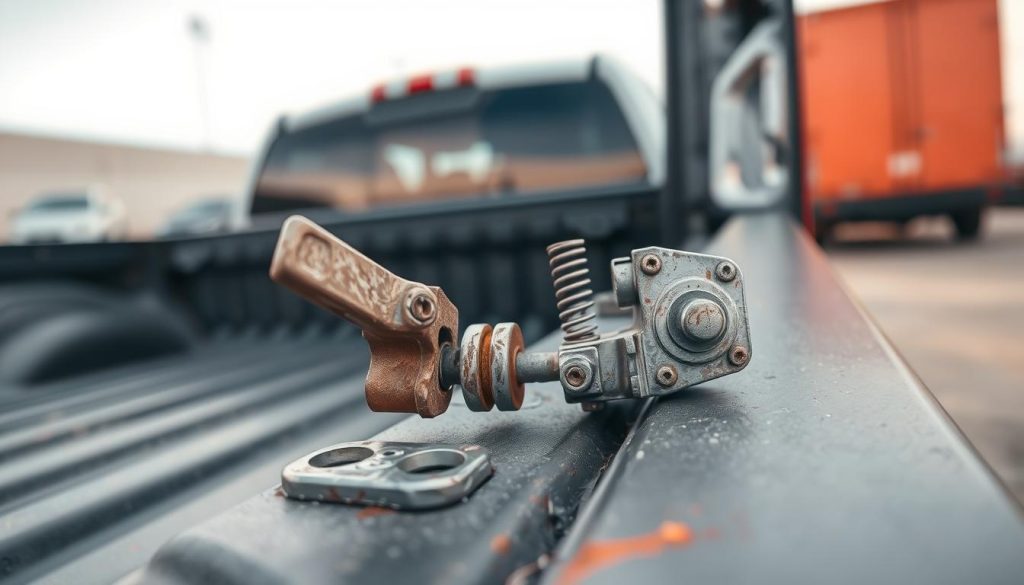
A faulty latch mechanism is a common reason for a tailgate that won’t stay closed. The latch is responsible for securing the tailgate in place. Over time, the latch can wear out or become damaged due to frequent use or exposure to the elements. If the latch is not engaging properly, the tailgate may not remain closed. Inspecting the latch for any signs of wear or damage is crucial. For more detailed information on diagnosing and fixing latch issues, you can refer to resources like this guide.
Worn or Damaged Striker Plate
The striker plate is another critical component that can cause issues if it’s worn or damaged. The striker plate is the metal plate on the vehicle’s body that the latch engages with when the tailgate is closed. If it’s misaligned or damaged, the latch cannot secure the tailgate properly. Checking the striker plate for any signs of wear or misalignment is a necessary step in diagnosing the problem.
Malfunctioning Power Latch Actuator
In vehicles equipped with a power tailgate, a malfunctioning power latch actuator can cause the tailgate to open unexpectedly. The power latch actuator is responsible for electronically controlling the latch. If it fails, it may not properly secure the tailgate. Diagnosing issues with the power latch actuator involves checking the electronic controls and the actuator itself for any faults.
Key Fob Issues and Accidental Button Presses
Sometimes, the issue might not be mechanical but rather related to the key fob or accidental button presses. If the key fob is malfunctioning or if the buttons are being pressed accidentally, it could trigger the tailgate to open. Checking the key fob’s battery and ensuring it’s functioning correctly can help resolve the issue.
By understanding these common causes, vehicle owners can take the first steps towards diagnosing and fixing the problem with their tailgate.
2. Why Does My Tailgate Keep Opening? How to Diagnose the Problem
To solve the mystery of your tailgate opening unexpectedly, a systematic diagnosis is required. Diagnosing the issue involves a series of steps that help identify the root cause of the problem.
Visual Inspection of the Latch and Striker
The first step in diagnosing the issue is to perform a visual inspection of the latch and striker. Check for any signs of wear or damage on both components. Ensure that the latch is properly aligned with the striker plate.
Look for any debris or obstructions that might be preventing the latch from closing correctly. Clean out any dirt or debris you find.
Testing the Electronic Components
Modern vehicles often have electronic components involved in the tailgate operation. Testing these components is crucial. Check the power latch actuator and any associated sensors or switches.
Use a multimeter to test for any electrical issues, such as a short circuit or faulty wiring. Consult your vehicle’s repair manual for specific guidance on testing these components.
Checking for Wiring Problems
Wiring issues can cause malfunctioning of the tailgate. Inspect the wiring harness for any signs of damage, such as cuts, frays, or corrosion.
Check all connections to ensure they are secure and not corroded. Repair or replace any damaged wiring or connectors you find.
Identifying Sensor Malfunctions
Many modern vehicles are equipped with sensors that control or monitor the tailgate operation. If these sensors malfunction, they can cause the tailgate to open unexpectedly.
Check the sensors for any signs of damage or misalignment. Use a diagnostic tool to test the sensors and determine if they are functioning correctly.
3. Step-by-Step Fixes for a Tailgate That Won’t Stay Closed
Fixing a tailgate that won’t stay closed is easier than you think with our step-by-step guide. The following solutions address common issues that cause this problem, including faulty latch mechanisms, misaligned striker plates, malfunctioning power latch actuators, and key fob issues.
Fix 1: Adjust or Replace the Striker Plate
The striker plate is a critical component that works in conjunction with the latch to keep the tailgate closed. Over time, it can become misaligned or worn out, causing the tailgate to open unexpectedly.
Tools You’ll Need
- Screwdriver (flathead and Phillips)
- Adjusting tool (specific to your vehicle’s striker plate design)
- Replacement striker plate (if necessary)
Adjustment Process
- Inspect the striker plate for any signs of wear or misalignment.
- Loosen the screws holding the striker plate in place.
- Adjust the striker plate to align properly with the latch.
- Tighten the screws and test the tailgate.
If adjustment doesn’t solve the issue, consider replacing the striker plate. For more information on related issues, you can check out our article on why your trunk keeps popping open.
Fix 2: Repair or Replace the Latch Assembly
A faulty latch assembly can prevent the tailgate from closing properly. Inspecting and repairing or replacing this component can resolve the issue.
Removing the Interior Panel
To access the latch assembly, you’ll need to remove the interior panel. Use a screwdriver to remove the screws, and gently pry the panel off.
Replacing the Latch Mechanism
- Disconnect the latch mechanism from the tailgate.
- Remove any retaining clips or screws holding the old latch in place.
- Install the new latch mechanism, ensuring it’s securely fastened.
- Reconnect the latch to the tailgate and test its operation.
Fix 3: Replace the Power Latch Actuator
The power latch actuator is an electronic component that can fail over time. Replacing it requires careful attention to detail.
Locating the Actuator
Consult your vehicle’s manual or manufacturer’s instructions to locate the power latch actuator.
Installation Steps
- Disconnect the electrical connector from the old actuator.
- Remove the mounting screws or clips.
- Install the new actuator, ensuring it’s properly secured.
- Reconnect the electrical connector and test the tailgate.
| Fix | Description | Tools Needed |
|---|---|---|
| Adjust or Replace Striker Plate | Align or replace the striker plate to ensure proper latch engagement. | Screwdriver, adjusting tool, replacement striker plate |
| Repair or Replace Latch Assembly | Inspect and repair or replace the latch assembly for proper function. | Screwdriver, new latch mechanism |
| Replace Power Latch Actuator | Replace the electronic actuator controlling the latch. | Screwdriver, new power latch actuator |
Fix 4: Reprogram Your Key Fob
Sometimes, the issue may not be mechanical but rather related to the key fob’s programming.
Battery Replacement
Start by replacing the key fob battery to rule out any issues related to power.
Reprogramming Instructions
- Consult your vehicle’s manual for reprogramming instructions.
- Follow the manufacturer’s steps to reprogram the key fob.
- Test the key fob to ensure it’s working correctly.
By following these step-by-step fixes, you should be able to resolve the issue with your tailgate. Remember to consult a professional if you’re not comfortable with these repairs.
4. Preventive Maintenance to Keep Your Tailgate Functioning Properly
A well-maintained tailgate is less likely to malfunction, thanks to preventive maintenance measures. By adopting a few simple habits, you can significantly extend the lifespan of your tailgate and its components.
Lubricating Moving Parts
Regular lubrication of the tailgate’s moving parts is essential to prevent wear and tear. Use a silicone-based lubricant to keep the hinges and latch mechanism running smoothly. Apply lubricant every 6 months or as needed, depending on your vehicle’s usage.
Inspection Schedule
Establishing a periodic inspection schedule can help identify potential issues before they become major problems. Check the tailgate’s latch, hinges, and seals for signs of wear or damage every 3 months. Early detection can save you from costly repairs down the line.
| Inspection Item | Frequency | Action Required |
|---|---|---|
| Tailgate Latch | Every 3 months | Lubricate or replace if damaged |
| Hinges | Every 6 months | Lubricate or tighten loose screws |
| Seals | Every 3 months | Inspect for damage or wear; replace if necessary |
Protecting Against Weather Damage
Weather conditions can significantly impact your tailgate’s durability. Apply a rust-inhibiting coating to metal parts to protect against corrosion. Regularly clean the tailgate and its components to prevent dirt and debris from accumulating.
Proper Tailgate Usage Habits
Practicing proper tailgate usage habits can also contribute to its longevity. Avoid slamming the tailgate shut, as this can cause unnecessary stress on the hinges and latch. Instead, gently close the tailgate until it latches securely.
By following these preventive maintenance tips, you can ensure your tailgate remains in good working condition and continues to serve you well over time.
5. Conclusion
A tailgate that keeps opening can be frustrating and compromise the safety of your vehicle. By understanding the common reasons behind this issue, such as a faulty latch mechanism or worn striker plate, you can take the necessary steps to repair it.
The solutions outlined in this guide provide a comprehensive tailgate repair summary, from diagnosing the problem to implementing fixes like adjusting the striker plate or replacing the power latch actuator.
To avoid future issues, incorporating regular tailgate maintenance tips into your routine is essential. This includes lubricating moving parts, inspecting the tailgate periodically, and protecting it against weather damage.
By following these tips and being mindful of your tailgate usage habits, you can ensure your vehicle’s tailgate functions properly and securely. Proper maintenance not only prevents unexpected tailgate openings but also extends the lifespan of your vehicle’s components.
FAQ
Why does my Ford F-150 tailgate open unexpectedly while I am driving?
This issue is frequently attributed to a malfunctioning power latch actuator or a misaligned striker plate. In many modern trucks, such as the Ford F-150 or Chevrolet Silverado, electronic vibrations or a short in the wiring harness can trigger the release mechanism. It is essential to inspect the wiring loom near the pivot point for any signs of fraying or corrosion.
Can a faulty key fob cause the tailgate to unlatch on its own?
Yes, signal interference or a sticking button on your OEM key fob can send unintended “open” commands to the vehicle’s Body Control Module (BCM). Additionally, if the internal circuitry of the remote is damaged, it may cause “ghost presses.” To troubleshoot, try removing the battery from your remote for a day to see if the unwanted opening persists.
What tools are required to adjust a misaligned striker plate?
To properly align the striker plate, you will typically need a Torx T40 or T45 bit driver, depending on your vehicle’s make. Loosening the bolts slightly allows you to reposition the plate so the latch mechanism engages centrally and securely. Brands like Snap-on or Craftsman offer precision sets that prevent stripping these specific automotive fasteners.
How can I tell if the latch assembly needs to be replaced instead of just cleaned?
If you have applied a degreaser and re-lubricated the part but the locking paws still fail to snap into a closed position, the internal tension springs have likely weakened. If the tailgate rattles significantly or fails to catch even when slammed, a full replacement using a high-quality Dorman Latch Assembly is the most reliable solution.
What is the best lubricant to prevent tailgate sticking during winter?
For automotive latches, you should use WD-40 Specialist Protective White Lithium Grease or a silicone-based spray. Unlike heavy oils, these lubricants do not attract dust and grit, and they remain effective in sub-zero temperatures, preventing the latch pawl from seizing or freezing in the open position.
Will a software update fix my electronic tailgate release issues?
In some instances, yes. Manufacturers like GMC and Ram have previously issued technical service bulletins (TSBs) regarding the tailgate electronics. A dealership can use an OBD-II diagnostic scanner to check for firmware updates for the Body Control Module that specifically address latch timing and sensor sensitivity.
Does the rearview camera wiring affect the tailgate latch?
On many vehicles, the rearview camera and the electronic latch release share the same wiring harness and connector. If moisture enters the plug, it can cause a short circuit that bridges the connection, tricking the computer into thinking the handle has been pulled. Using dielectric grease on the connection points can help prevent this moisture-related malfunction.