Core question: what happens when a keyless vehicle runs while the fob is missing, dead, or out of range? This short intro explains why that matters for everyday driving in the United States.
Quick fact: most modern keyless models keep the engine running once started. The main limit is restarting after shutdown if the authorized signal is absent.
This guide previews common scenarios: dead fob battery, left-behind remote, radio interference, and differences across makes and trims. It frames safety first and offers clear steps to avoid being stranded.
What you will learn: how systems vary by manufacturer, where to confirm rules for your vehicle, what warnings to expect, and immediate actions when the dash shows Key Not Detected.
Key Takeaways
- Engines usually keep running after start; distance rarely ends operation.
- Restarting without an authorized device is the main restriction.
- Scenarios include dead battery, lost remote, interference, and model differences.
- Check the owner’s manual to confirm your vehicle’s rules.
- Follow safety steps on dash warnings and get help before risking a restart attempt.
Why drivers ask about driving without key fob in today’s keyless cars
Seeing a ‘Key Not Detected’ message sparks one common practical worry for drivers.
Keyless convenience makes starting and locking simple, but it also creates anxiety when the remote signal fails. A dashboard alert feels urgent because many people fear being unable to restart after a stop.
Common real-world situations
- fob battery dies in a parking lot and the dash shows Key Not Detected.
- The fob is misplaced between errands, leaving the driver unsure about restarting.
- The remote gets left at home or buried in a bag during a quick stop.
Most people are not looking to bypass security. They simply want to avoid being stranded after fueling, grabbing coffee, or picking up kids. The core issue changes with engine status: if the engine is already running, you usually keep going. If it is off, restarting often requires an authorized device nearby.
| Situation | Immediate effect | What drivers should do |
|---|---|---|
| fob battery dies | Dash warning; restart may fail | Use backup detect method or replace battery |
| fob lost between stops | Running continues; restart at risk | Park safely, locate spare, consult manual |
| fob left behind | Car runs but security limits apply | Call for help or get spare from home |
How far can a car drive without the key fob: what usually happens once you’re already moving
Typical outcome: if the vehicle is already moving when the transmitter signal drops, most modern keyless systems keep the engine running until you stop or run out of fuel.
Most vehicles keep running until you turn off the engine or run out of fuel
Manufacturers design ignition and power systems to avoid sudden loss of propulsion or steering assist while underway. This minimizes crash risk and keeps brakes and steering functional.

Why some models may limit operation based on proximity and security logic
Some makes add proximity checks that restrict features if the transmitter is absent for long. In rare cases, systems will enter limp mode or reduce certain functions to protect against theft.
What warnings you can expect while driving without transmitter
- Audible chimes and repeated dash alerts like Key Not Detected or Key Out of Range.
- Prompts that note the vehicle may not restart once turned off.
- Escalating messages if the signal remains absent for multiple minutes.
| Situation | Likely effect | Recommended action |
|---|---|---|
| Signal drops while driving | Engine runs; restart at risk | Finish trip, avoid turning ignition off |
| Signal absent long-term | Increased alerts; possible function limits | Pull over safely, find spare transmitter or call for help |
| Model with strict proximity rules | Limited features or limp mode | Consult owner manual; contact dealer if needed |
How key fobs and keyless entry systems work (signals, range, and sensors)
Short-range radio links and cabin sensors form the backbone of modern keyless entry technology. The small transmitter carries a unique ID. Vehicle receivers and antennas listen for that ID and confirm authorization before unlocking or enabling start.
RFID vs. Bluetooth authentication
RFID-style proximity uses low-power radio pulses and passive detection. It reacts quickly and usually limits activation to near the doors or inside the cabin.
Bluetooth-based systems offer longer range and pairing features. They may behave differently if a phone or laptop is nearby.
What “in range” usually means
Unlocking often works from tens of feet under ideal conditions. Push-button start, however, typically requires the transmitter inside the cabin or within a tight proximity zone.
Why radio interference matters
Strong RF sources — airports, broadcast towers, heavy electronics — can block or degrade signals. Metal objects, pockets, and nearby devices also reduce reliability.
| Topic | Typical behavior | Driver impact |
|---|---|---|
| RFID proximity | Short-range, fast handshake | Starts only when remote is inside cabin |
| Bluetooth entry | Longer range, paired device needed | May detect remote earlier; false positives possible |
| RF interference | Weaker or dropped signals | Dash warnings; restart risk if signal lost |
Can you start car without key fob when the fob battery dies?
Many models include an emergency detection path for a dead transmitter. If the dash warns that the fob battery is low or the battery dies, don’t panic. Follow the vehicle’s emergency steps to start.
Use the backup detector
Hold the remote directly against the push button or near the steering column sensor. Press the brake and press the button as you would normally. The car often reads the ID even with a weak battery.
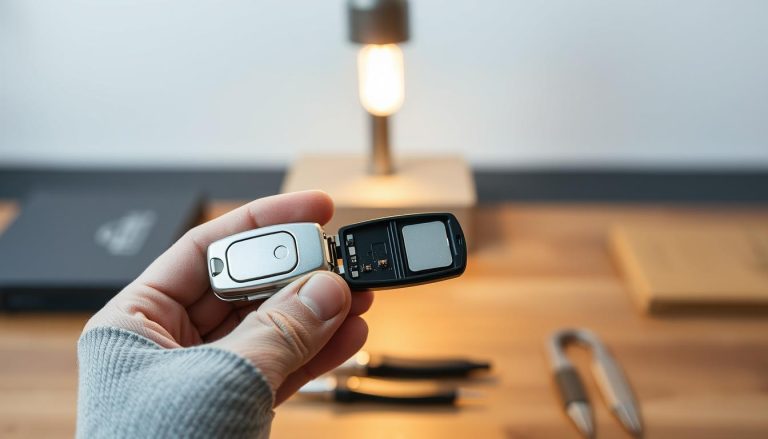
Replace the battery
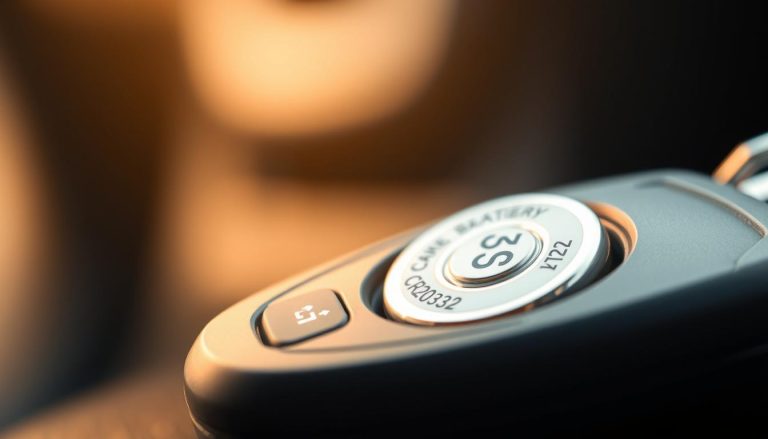
Most remotes use CR2025 or CR2032 coin cells. Match the correct type and the polarity when you install. If unsure, consult the owner’s manual or a dealer for parts and guidance.
What changes after the engine is off
If you shut down, restarting may fail until the vehicle authenticates a working device. That means you should avoid turning off the ignition if you cannot verify a spare or new battery.
| Issue | Immediate action | Why it matters |
|---|---|---|
| Low dash warning | Use backup detector; replace battery soon | Prevents no-restart scenarios |
| Battery dies while out | Hold remote to start; get replacement | Emergency start preserves trip |
| No spare present | Call roadside or retrieve spare | Avoid shutting ignition to prevent lockout |
What happens if you drive off without key fob left behind or out of range
Most drivers face one clear outcome: the vehicle keeps moving but warns you that restarting may fail. In modern keyless car systems, an absent transmitter usually triggers chimes and dashboard messages while allowing continued travel.
Will the engine shut off while moving?
Safety rules prioritize control. Engineers design systems so the engine does not stop mid-trip even when the remote signal is lost. This prevents sudden loss of power, steering, or brakes.
What you may lose access to
If you stop and turn off the engine, you may not be able to restart without the fob. Locking and unlocking can also change: some models refuse remote lock, others require the mechanical key to regain entry.
- High-stakes fear: you usually won’t stall, but you can be stranded after shutdown.
- Security logic: start authorization stays strict while run authorization is permissive.
- Immediate actions: limit stops, retrieve or arrange a spare before shutting down.
Differences by make and model: how vehicle systems handle “without key” scenarios
Each brand applies its own proximity and theft-prevention logic, so outcomes differ when the remote is absent.
Two common behavior patterns
Many cars will run indefinitely until you shut down or run out of fuel. This design keeps you moving and avoids sudden power loss.
Other vehicles enforce limits. They may reduce features, refuse restart, or stop after a set time or distance when the remote is not detected.
Proximity rules vary
Some systems only need the transmitter nearby. Others require it inside the cabin or even in a specific pocket or console. Placement in a purse, back seat, or trunk can matter.
Where to check for your make
Look in the owner manual under smart key, keyless entry, or push-button start. Search for warning messages and emergency start steps before you rely on a spare.
| Make/Model | Typical behavior | Driver action |
|---|---|---|
| Most sedans and SUVs | Run until shut off; restart may fail | Keep spare or avoid shutdown |
| Some luxury brands | Limit features; stricter proximity | Test in driveway; consult dealer |
| Certain compact models | Sensitive to placement; short resets | Store remote in consistent spot |
Risks of driving without the key fob (security, safety, and inconvenience)
Minor stops like fuel or food can become problem points when the transmitter signal is gone.
Stranding risk: fuel stops, stalls, and no-restart situations
One common failure moment: you pull onto the road fine, then a routine fuel stop turns into a no-restart event. The engine may have run normally, yet the vehicle will not restart after shutdown if the authorized device is absent.
If the engine stalls or you must turn off for safety, you could be stuck even though you drove without issue earlier. That risk is most acute on long stretches or in remote areas.
Security concerns if the vehicle is running and the transmitter isn’t present
Security is more than theft prevention. A running vehicle left accessible without the transmitter may be easier for an opportunistic thief to move or attempt to tow away.
Some systems block restart but still allow movement while idling, which can create awkward exposure for drivers and passengers.
Potential legal and insurance complications
Liability and coverage depend on facts. If theft or damage occurs while the vehicle was running and no authorized device was nearby, insurers may investigate negligence.
| Risk | Why it matters | Quick action |
|---|---|---|
| Stranding on road | No restart after shutdown | Keep spare transmitter or call roadside |
| Security loss | Vehicle movable without restart | Stay with vehicle; contact police if threatened |
| Insurance disputes | Policy language may be ambiguous | Document incident; notify insurer promptly |
Do this instead: avoid intentionally leaving the transmitter behind. Treat dash warnings as actionable, carry a spare, and plan battery replacement before it fails. That simple habit protects safety and reduces security exposure for drivers on the road.
Best practices to prevent keyless car issues before you hit the road
Good pre-trip habits cut the chance of being stranded by a dead or missing fob.
Keep the transmitter in one place. Choose a pocket, cup holder, or pouch and use it every trip. Consistent placement stops “left behind” mistakes.
Respond to alerts. Chimes and dash warnings signal loss of detection. Stop somewhere safe and check the device instead of ignoring those prompts.
Spare and battery planning
Carry a spare transmitter at home or with a trusted person. A spare avoids long waits if a primary unit fails.
Replace the coin cell at the first sign of reduced range. Keep one spare battery in the glove box for quick replacement.
Storage, handling, and interference
Avoid heat, moisture, magnets, and metal near the remote. These reduce range and can block signals.
Keep the device away from phones and laptops and be mindful near airports and towers where strong RF can interfere with keyless entry.
| Practice | Why it helps | Quick tip |
|---|---|---|
| One consistent spot | Prevents leaving remote behind | Use front pocket or cup holder |
| Carry a spare | Backup for lost or dead unit | Store spare at home or with family |
| Proactive battery care | Stops sudden failures | Replace coin cell at low-range alert |
| Avoid interference | Improves detection reliability | Separate from phones; avoid strong RF areas |
Key fob replacement options and typical cost in the United States
After a lost remote, drivers in the United States face options that vary widely in price and time to restore start authorization.
Typical price expectations: basic remote replacements may run under $100 for simple transmitters. Modern push-to-start units often cost several hundred dollars when purchased and programmed at a dealer, commonly in the $300–$600 range.
What drives price: brand tier (mainstream versus luxury), encryption and immobilizer complexity, remote-start or proximity features, and whether the vehicle requires all existing keys present for programming.
Dealer vs. locksmith vs. OEM online
Dealerships usually charge the most but handle parts and programming in one visit.
Automotive locksmiths can be faster and cheaper, and many offer mobile service to program units on site.
Buying OEM parts online lowers part cost but often still needs professional programming to pair with vehicle systems.
Programming explained
Programming means pairing the transmitter to the vehicle’s security system so the car will allow start authorization, not just unlock doors. That step can require specialized tools or dealer procedures.
Immediate steps after a lost transmitter
- Use any spare immediately and secure the vehicle.
- Arrange replacement with a locksmith or dealer and ask about erasing the missing transmitter from authorized lists.
- Consider reprogramming to remove lost units if security is a concern.
| Option | Typical US price | Pros | Cons |
|---|---|---|---|
| Dealership | $300–$600 | Correct part, factory programming, warranty | Higher cost, possible wait time |
| Automotive locksmith | $100–$300 | Lower cost, mobile service, fast | May not support all luxury models |
| OEM online purchase | $50–$250 (part only) | Lowest part price | Still needs programming; returns and compatibility risk |
Practical prevention: label and store spares, replace coin batteries proactively, and test any new unit in a safe spot to confirm start authorization before relying on it on a trip.
Conclusion
How far can you drive without key fob sums up plainly: range usually matters less than whether you shut off and must restart.
Practical takeaway: many keyless car systems let a vehicle keep moving and will flash warnings that the key is not detected. If you stop and kill the engine, restarting often fails until an authorized device is present or a spare is used.
Behaviors vary by make and model. Check the owner’s manual for exact steps and emergency start methods. Follow simple habits: store the transmitter in one spot, replace coin batteries early, and carry a spare.
Safety first: if you suspect the remote is missing, plan your next move before stopping for fuel or leaving the vehicle to avoid being stranded.
FAQ
What happens if the key fob battery dies while the vehicle is already moving?
Most modern vehicles will keep the engine running normally after the fob battery dies, so you can continue driving until the engine is turned off or fuel runs out. Expect chimes and dashboard warnings indicating the fob is not detected; some makes may restrict restart or limit certain features if the fob remains out of range.
Will the engine shut off automatically if the fob leaves the cabin while driving?
For safety, automakers generally do not shut the engine off while the vehicle is in motion. The car usually continues to run, but it may prevent a restart after you stop. Always check your owner’s manual because a few models implement proximity or timer-based limits.
Can I restart the car after shutting it off if the fob battery is dead or the fob is out of range?
In many keyless systems you cannot restart without a working fob. Some vehicles include a backup detection method—hold the fob against the start button or a receiver location—to allow a restart with a dead battery. If the fob is simply out of range, bring it back into the cabin to restore normal function.
How far away does the keyless fob need to be for the car to detect it?
Range varies by system and technology. Typical passive RFID proximity works within a few feet inside the cabin. Bluetooth-based systems can allow greater distances but usually require closer proximity for push-button start. Environmental interference and vehicle design affect effective range.
What types of key fob technologies do manufacturers use?
Manufacturers commonly use passive RFID for proximity and low-power Bluetooth LE for enhanced features. RFID requires very close proximity for authentication, while Bluetooth can support larger ranges and two-way communication. Both systems rely on secure encryption to prevent relay attacks.
How can interference affect keyless operation?
Strong RF sources—airport equipment, radio towers, heavy electronics, or nearby transmitters—can block or confuse signals. Metal objects, magnets, and other electronics near the fob can also reduce effective range or cause intermittent detection failures.
What should I do if the fob battery dies? Which battery type do most fobs use?
Replace the coin-cell battery promptly; common types include CR2032 and CR2025. Use the owner’s manual or look inside the fob for the correct part number. If you need an emergency start, use the vehicle’s backup detection by holding the fob near the start button or the designated reader.
Are there differences between makes and models in how they handle no-fob scenarios?
Yes. Some brands allow indefinite operation while driving, others impose time or distance limits, and several require the fob to be inside the cabin to start or restart. Always consult the vehicle manual for model-specific rules and safeguards.
What risks come with driving when the fob is not present or not detected?
Primary risks are being unable to restart after a stop, potential security exposure if the vehicle remains running unattended, and inconvenience if you become stranded. In rare cases, insurance or legal issues could arise depending on local laws and circumstances.
What practical habits reduce the chance of getting stranded due to keyless fob issues?
Keep the fob in a consistent place—pocket, bag compartment, or cup holder—carry a programmed spare, replace batteries proactively, and heed dashboard warnings. Avoid storing the fob near phones, laptops, or magnets that can interfere with the signal.
How much does replacing a lost or damaged fob typically cost in the United States?
Costs vary widely by brand and programming needs. Dealer replacements often run several hundred dollars; locksmiths can be cheaper; buying an OEM or aftermarket fob online reduces parts cost but still may require professional programming. Price depends on encryption level and vehicle model.
What immediate steps should I take after losing a fob to protect the vehicle?
Contact your dealer or a reputable locksmith to disable or reprogram the lost fob. If available, use your automaker’s mobile app to lock the vehicle or change access settings. Report the loss if you suspect theft and document the incident for insurance purposes.
Is there a way to start a vehicle without the original fob if my model supports a backup method?
Some models allow emergency starts with a nonpowered fob by placing it against the start button or a reader location. Others require a mechanical key blade (often hidden inside the fob) to unlock the door and then use a backup detection area to start. Consult the manual for the exact procedure.