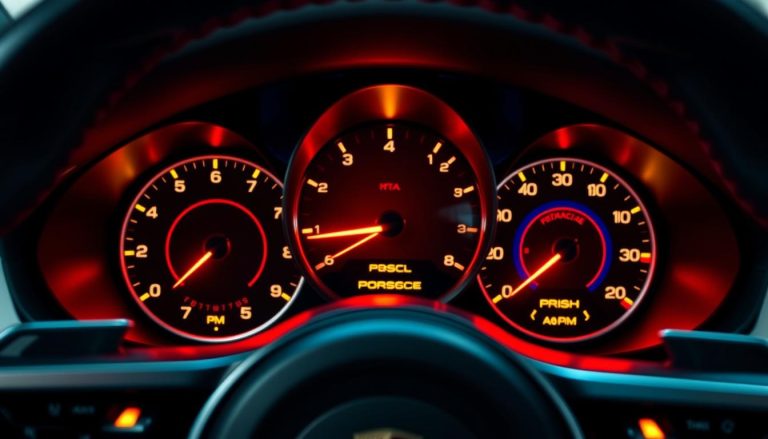
Owners of high-end cars often see warning lights on the dashboard. Spotting technical problems early keeps your vehicle safe on the road. Fast action stops small glitches from growing into expensive repairs.
We help you find drivetrain malfunction symptoms early. Ignoring these signals might result in steep bills plus long repairs. Effective maintenance ensures longevity for your investment.
This overview highlights various Porsche issues to provide clarity. Driving should always feel effortless. We help you stay safe while enjoying the open road.
Knowing what your car needs helps stop sudden breakdowns and failures. Let us explore the best ways to protect your transmission system.
Key Takeaways
- Watch for dashboard warning symbols immediately.
- Listen for unusual grinding or clicking noises.
- Feel for vibrations while you are accelerating.
- Observe any fluid leaks under your vehicle.
- Notice delays or jerks during gear shifts.
- Seek professional help for digital diagnostics.
Understanding Porsche Drivetrain Systems
A deep dive into Porsche’s drivetrain systems reveals the complexity and sophistication that underpin the brand’s legendary performance. The drivetrain is a critical component of any vehicle, and in Porsches, it’s particularly intricate due to the brand’s focus on delivering exceptional driving dynamics and power.
What Is a Drivetrain in Porsche Vehicles
The drivetrain in Porsche vehicles refers to the system of components that transmit power from the engine to the wheels, enabling the vehicle to move. This includes the transmission, driveshaft, differential, and axles. Porsche’s drivetrain systems are designed to optimize power delivery and handling, making them a key factor in the brand’s performance reputation.
Porsche utilizes various drivetrain configurations across its model lineup, including rear-wheel drive (RWD), all-wheel drive (AWD), and dual-clutch transmissions like the PDK. Each configuration is engineered to enhance the driving experience, whether on the road or on the track.
Common Porsche Models Affected by Drivetrain Issues
Several Porsche models have been known to experience drivetrain issues, often related to the complexity of their transmission systems. Some of the models commonly affected include:
- The Porsche 911, particularly models with the PDK transmission
- The Porsche Cayman and Boxster, which have had issues with their manual and PDK transmissions
- The Porsche Macan and Cayenne SUVs, which can experience drivetrain problems due to their AWD systems
Understanding the specific drivetrain configuration in your Porsche is crucial for identifying potential issues early on.
How the Drivetrain Warning System Works
Porsche vehicles are equipped with advanced drivetrain warning systems that alert drivers to potential problems. These systems monitor various parameters, including transmission temperature, fluid levels, and electronic control unit (ECU) data. When an anomaly is detected, the system triggers a warning message on the dashboard, such as “Drivetrain Malfunction” or “Transmission Fault.”
The drivetrain warning system is designed to provide early notification of issues, allowing drivers to address problems before they lead to more serious damage or performance degradation. It’s essential for Porsche owners to understand these warnings and take prompt action when they appear.
Drivetrain Malfunction Porsche: Causes and Fixes
Porsche drivetrain malfunctions can be caused by a variety of factors, requiring a comprehensive understanding to diagnose and repair effectively. The drivetrain is a complex system, and issues can arise from different components, making it essential to identify the root cause accurately.
Transmission Control Module Failures
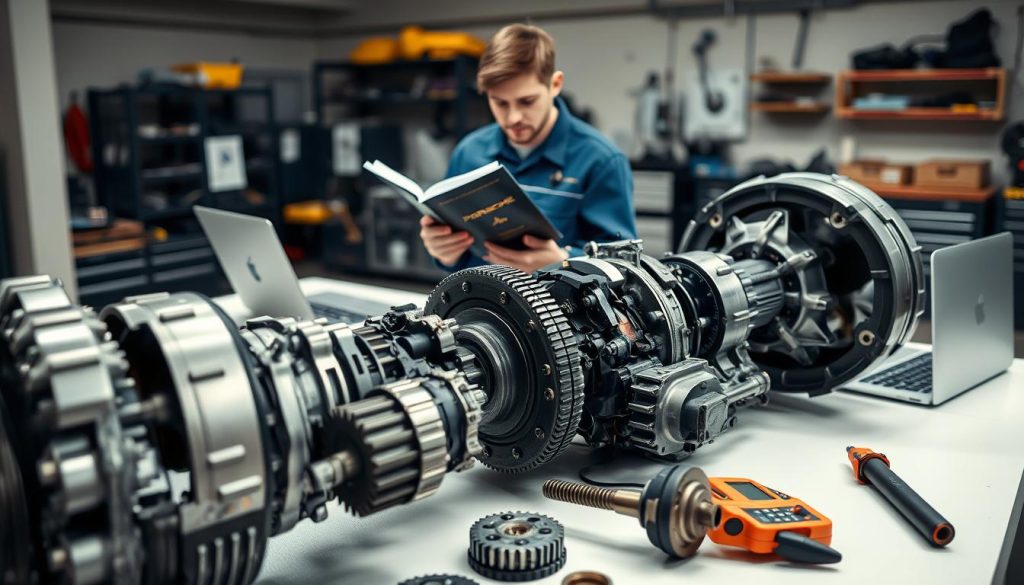
The Transmission Control Module (TCM) plays a crucial role in managing the transmission’s operation, ensuring smooth gear shifts and optimal performance. Failures in the TCM can lead to erratic shifting, slipping, or failure to engage gears properly.
Common symptoms of TCM failures include delayed or harsh shifting, and in some cases, the transmission may default to a limp mode to prevent further damage. To address TCM issues, diagnostic testing is necessary to determine if the module needs reprogramming or replacement.
PDK Transmission Issues
Porsche’s PDK (Porsche Doppelkupplungsgetriebe) transmission is known for its high-performance capabilities. However, like any complex component, it can be prone to issues such as mechatronic failures or problems with the dual-clutch mechanism.
Symptoms of PDK transmission issues may include hesitation during acceleration, unusual noises, or difficulty shifting gears. Regular maintenance, including software updates and fluid checks, can help prevent some of these issues.
Electrical System and Sensor Problems
The electrical system and various sensors play a vital role in the operation of the drivetrain. Faulty sensors or electrical issues can disrupt the normal functioning of the drivetrain, leading to malfunctions.
Common electrical and sensor-related problems include faulty speed sensors, wiring issues, or problems with the drivetrain control module. Diagnostic scans can help identify these issues, allowing for targeted repairs.
Mechanical Component Wear and Damage
Mechanical components within the drivetrain can wear out or become damaged over time, leading to malfunctions. This can include wear on clutch packs, bearings, or other internal components.
Regular maintenance and inspections can help identify mechanical issues early on. In some cases, replacement of worn or damaged components may be necessary to restore proper drivetrain function.
Recognizing Drivetrain Malfunction Symptoms
Drivetrain malfunctions in Porsche vehicles can manifest through various symptoms, including warning lights, unusual sounds, and performance issues. Recognizing these signs early is crucial for preventing further damage and ensuring the vehicle’s optimal performance.
Dashboard Warning Lights and Error Messages
One of the most immediate indicators of a drivetrain malfunction is the illumination of warning lights on the dashboard. The Porsche drivetrain warning light can signal a range of issues, from minor problems to serious malfunctions that require immediate attention.
Common error messages related to drivetrain malfunctions include “Drivetrain Malfunction” or “Transmission Fault.” These messages often appear in conjunction with illuminated warning lights, providing a clear indication that something is amiss.
Unusual Sounds and Vibrations During Operation
Unusual sounds and vibrations during operation are other key indicators of drivetrain issues. Grinding, whining, or clunking noises can signal problems with the transmission or other drivetrain components.
Vibrations felt while driving, particularly when accelerating or decelerating, can also be a sign of drivetrain malfunction. These vibrations may be due to worn or damaged components, imbalance, or misalignment within the drivetrain system.
Performance Issues and Power Loss
A noticeable decrease in performance or power loss during driving can be a symptom of a drivetrain malfunction. This might manifest as hesitation or stuttering when accelerating, or a general feeling of sluggishness.
Such performance issues can be due to a variety of factors, including transmission problems, clutch issues, or other mechanical failures within the drivetrain.
Gear Shifting Difficulties and Delayed Response
Difficulty shifting gears or a delayed response when shifting can be a clear indication of a drivetrain issue. This can be particularly noticeable in PDK transmission-equipped Porsches, where a delay in gear engagement or an unusual feeling when shifting can signal a problem.
| Symptom | Possible Cause | Recommended Action |
|---|---|---|
| Dashboard Warning Lights | Drivetrain or transmission fault | Scan for diagnostic trouble codes |
| Unusual Sounds/Vibrations | Worn or damaged drivetrain components | Inspect drivetrain components |
| Performance Issues/Power Loss | Transmission or mechanical failure | Perform road test evaluation |
| Gear Shifting Difficulties | Transmission or clutch issues | Check transmission fluid levels and condition |
Step-by-Step Diagnostic Process
A methodical diagnostic process is essential for identifying the root cause of drivetrain issues in Porsche vehicles. This structured approach ensures that all potential causes are considered and evaluated systematically.
Scan for Diagnostic Trouble Codes
The first step in diagnosing a drivetrain malfunction is to scan for diagnostic trouble codes using a compatible scan tool. Modern Porsche vehicles are equipped with advanced onboard diagnostics that can provide valuable insights into the drivetrain’s performance and any issues it may be experiencing.
Connecting a scan tool to the vehicle’s OBD-II port allows technicians to retrieve any stored trouble codes, which can then be referenced against a database to understand their meaning and relevance to the drivetrain.
- Use a Porsche-specific scan tool for accurate diagnostics.
- Record all retrieved trouble codes for further analysis.
- Clear codes after repairs to monitor if they return.
Inspect Transmission Fluid Levels and Condition
Next, it’s crucial to inspect the transmission fluid levels and condition. The transmission fluid plays a vital role in the smooth operation of the drivetrain, affecting both performance and longevity.
Checking the fluid level ensures it’s at the recommended level, as specified in the owner’s manual or on the manufacturer’s placard under the hood. Additionally, assessing the fluid’s condition can reveal signs of contamination or degradation.
Examine Electrical Connections and Sensors
Electrical issues can often be the root cause of drivetrain malfunctions. Therefore, examining the electrical connections and sensors associated with the drivetrain is a critical step.
This involves checking for any signs of wear, corrosion, or damage on the wiring and connectors. Sensors related to the drivetrain, such as speed sensors and pressure sensors, should be inspected to ensure they are functioning correctly.
- Inspect wiring and connectors for damage or corrosion.
- Test sensors using a multimeter or oscilloscope.
- Consult the wiring diagram for specific circuit information.
Perform Road Test Evaluation
A road test is an essential part of the diagnostic process, allowing for the evaluation of the drivetrain’s performance under real-world conditions.
During the test, pay attention to any unusual noises, vibrations, or performance issues. This firsthand experience can provide valuable insights into the nature of the problem.
- Monitor for any warning lights or error messages on the dashboard.
- Note the conditions under which the malfunction occurs.
- Test the vehicle under various driving conditions.
Review Service History and Previous Repairs
Finally, reviewing the vehicle’s service history and previous repairs can offer clues to recurring issues or previously identified problems.
This step involves checking maintenance records, repair invoices, and any documentation related to drivetrain issues. Understanding the vehicle’s history can help in diagnosing the current malfunction.
By following this step-by-step diagnostic process, Porsche owners and technicians can systematically identify and address drivetrain malfunctions, ensuring the vehicle operates at its optimal level.
Effective Solutions and Repair Methods
Effective repair of Porsche drivetrain issues involves a combination of advanced diagnostic techniques and targeted repair strategies. Once the root cause of the malfunction is identified, Porsche owners can proceed with the most appropriate repair method.
Software Updates and System Recalibration
In many cases, a drivetrain malfunction can be resolved through software updates or system recalibration. Porsche regularly releases software updates to improve transmission performance and address known issues. Updating the Transmission Control Module (TCM) software can often resolve problems related to shifting, hesitation, or erratic behavior.
It’s essential to ensure that the vehicle’s software is up-to-date, as outdated software can lead to compatibility issues and malfunctions. A certified Porsche technician can perform the necessary updates and recalibrate the system to ensure optimal performance.
Transmission Fluid Service and Replacement
The condition and level of transmission fluid play a critical role in the smooth operation of the drivetrain. Regular transmission fluid service is vital for maintaining the health of the transmission. This includes checking the fluid level, inspecting its condition, and replacing it as recommended by the manufacturer.
For Porsche models equipped with dual-clutch transmissions (PDK), using the correct type of transmission fluid is crucial. The wrong fluid can lead to decreased performance and potentially cause damage to the transmission.
Component Replacement and Mechanical Repairs
In cases where a component failure is identified, replacement or mechanical repairs may be necessary. This could involve replacing worn or damaged parts within the transmission or drivetrain. Common components that may require replacement include clutch packs, bearings, and seals.
A thorough inspection by a qualified technician is necessary to determine the extent of the required repairs. In some instances, a complete transmission overhaul or replacement may be the most cost-effective solution in the long run.
When to Seek Certified Porsche Technician Assistance
While some repairs can be handled by experienced DIY enthusiasts, drivetrain malfunctions often require the expertise of a certified Porsche technician. If the issue persists after basic troubleshooting or if the necessary repairs are beyond your comfort level, it’s time to seek professional help.
Certified technicians have the training, tools, and access to manufacturer resources to diagnose and repair complex drivetrain issues efficiently. They can also provide guidance on preventive maintenance to minimize the risk of future malfunctions.
| Repair Method | Description | Benefit |
|---|---|---|
| Software Updates | Updating TCM software to the latest version | Resolves issues related to shifting and performance |
| Transmission Fluid Service | Checking and replacing transmission fluid as needed | Maintains transmission health and prevents damage |
| Component Replacement | Replacing worn or damaged drivetrain components | Restores optimal drivetrain function and prevents further damage |
Preventive Maintenance for Drivetrain Longevity
Preventive maintenance plays a vital role in maintaining the health and performance of Porsche drivetrains. By adopting a proactive approach, Porsche owners can significantly reduce the risk of drivetrain malfunctions and ensure their vehicle operates at optimal levels.
Recommended Transmission Service Intervals
Regular transmission servicing is critical for the longevity of a Porsche’s drivetrain. The recommended service intervals can vary depending on the model and year of the vehicle. Generally, Porsche recommends checking the transmission fluid level and condition every 30,000 to 60,000 miles. For more precise guidance, refer to your owner’s manual or consult with a certified Porsche technician.
| Porsche Model | Transmission Type | Recommended Service Interval |
|---|---|---|
| Porsche 911 | PDK | 30,000 miles |
| Porsche Cayman | Manual | 60,000 miles |
| Porsche Macan | Automatic | 40,000 miles |
Proper Driving Techniques for Porsche Vehicles
Driving techniques can significantly impact the health of a Porsche’s drivetrain. Avoiding aggressive acceleration and braking can reduce wear on the transmission and other drivetrain components. Additionally, using the correct gear for the driving conditions can help maintain optimal performance and reduce the risk of damage.
Regular Fluid Monitoring and Quality Checks
Monitoring the condition and level of transmission fluid is essential for maintaining the health of the drivetrain. Low fluid levels or degraded fluid quality can lead to increased wear and potentially cause malfunctions. Regular checks can help identify issues before they become major problems.
Early Warning Sign Detection
Being aware of the early warning signs of drivetrain issues can help prevent minor problems from becoming major repairs. Symptoms such as unusual noises, vibrations, or changes in performance should be investigated promptly. For more information on diagnosing and addressing drivetrain issues, you can refer to resources on transmission fault diagnosis and repair in other vehicles, which may provide valuable insights.
Conclusion
Understanding and addressing Porsche drivetrain issues is crucial for maintaining your vehicle’s performance and longevity. A drivetrain malfunction in Porsche vehicles can lead to significant problems if not diagnosed and repaired promptly.
By recognizing the symptoms of drivetrain issues, such as unusual sounds, vibrations, or dashboard warning lights, you can take proactive steps to prevent further damage. Regular maintenance, including transmission fluid checks and software updates, plays a vital role in preventing drivetrain malfunction Porsche.
Following the diagnostic process and repair methods outlined in this guide can help you identify and resolve issues efficiently. It’s essential to stay on top of recommended maintenance schedules and driving techniques to ensure your Porsche’s drivetrain operates smoothly.
By taking a proactive approach to maintaining your Porsche’s drivetrain, you can enjoy optimal performance and extend the lifespan of your vehicle.
FAQ
What exactly does a “Drivetrain Malfunction” warning mean in a Porsche?
In a Porsche, this warning indicates that the engine management system or the Transmission Control Module (TCM) has detected a fault in the power delivery sequence. This could range from a minor sensor glitch to a significant mechanical failure within the Porsche Doppelkupplung (PDK) system or the transfer case. When this light appears, the vehicle often limits engine power to prevent further internal damage.
Which Porsche models are most frequently associated with drivetrain alerts?
While any high-performance vehicle can experience issues, the Porsche Cayenne, Porsche Macan, and Porsche Panamera are the models most commonly cited by owners for drivetrain-related concerns. These models utilize complex all-wheel-drive systems and advanced electronics that require precise maintenance to remain functional.
Can a failing battery cause a drivetrain malfunction message?
Yes, Porsche vehicles are highly sensitive to voltage fluctuations. If the battery is weak or the electrical system is failing, it can trigger “ghost” codes and drivetrain warnings. Before performing expensive mechanical repairs, it is often wise to test the battery health and ensure the alternator is providing a steady charge.
What are the common symptoms of a PDK transmission issue?
Common signs include delayed gear engagement, erratic shifting patterns, or a total loss of reverse gear. In many cases, these symptoms are caused by failing solenoids or temperature sensors within the PDK unit. Promptly scanning the vehicle with a PIWIS diagnostic tool or a high-quality OBD-II scanner can help isolate the specific fault code.
Is it safe to continue driving my Porsche with a drivetrain warning active?
It is generally not recommended to continue driving, as a drivetrain malfunction can lead to sudden power loss or transmission seizure. If the warning is accompanied by unusual vibrations or metallic noises, pull over immediately. Driving in Limp Mode should only be done to reach a safe location or a nearby certified Porsche technician.
How can software updates resolve drivetrain malfunctions?
Many modern Porsche drivetrain issues are electronic rather than mechanical. A system recalibration or a software patch provided by the manufacturer can fix communication errors between the engine and the transmission control unit, often resolving shifting hesitations and “false” warning lights without the need for physical parts replacement.
What is the recommended service interval for Porsche transmission fluid?
While service manuals for models like the Porsche 911 or Cayman may suggest long intervals, many experts recommend a transmission fluid service every 40,000 to 60,000 miles. Fresh fluid ensures that the hydraulic components within the PDK or Tiptronic systems remain lubricated and cool, significantly extending the drivetrain longevity.
When should I seek professional assistance from a dealership versus a DIY repair?
Simple tasks like checking for loose electrical connections or scanning for Diagnostic Trouble Codes (DTCs) can be done by owners. However, if the diagnostic results point to internal gear wear, transfer case failure, or require the use of the proprietary PIWIS software for recalibration, it is essential to visit a certified professional to ensure the vehicle’s warranty and performance standards are maintained.