This short guide explains a common dash alert many drivers see: the car blinks normally for a few cycles, then speeds up while a dash message says the right rear turn indicator failed.
The warning signals that the vehicle has detected an abnormal condition in the right rear turn circuit. It is not always just a burned bulb. The monitoring system watches load, voltage, and ground, so a wiring fault or intermittent contact can trigger the dash note even when the external light looks functional.
Expect practical steps. This article focuses on why the message appears, why the issue can be intermittent, and a logical troubleshooting flow. Start with simple checks in the driveway, then move to specific electrical tests and module diagnostics if needed.
Key Takeaways
- Dash alerts can mean a circuit anomaly, not only a bad bulb.
- Intermittent fast blinking plus a dash message is a common pattern.
- Visually working lights can still hide load or ground issues.
- Begin with simple driveway checks before replacing parts.
- Follow a stepwise path: bulbs, sockets, wiring, then scan-tool checks.
What Does Right Rear Turn Indicator Failure Mean?
When a dash message appears, it often points to the car’s monitoring system sensing a load mismatch on the right-side rear signalling circuit. Most US-market vehicles use the Body Control Module (BCM) or lamp-out detection to compare expected current or voltage against real-time feedback.
How the system detects a problem
The BCM watches the rear turn circuit for a steady load. If current or voltage falls outside a preset range, the module logs a fault and pushes a dash message. This alert can appear even if the external lights seem lit.
Why fast blinking happens after a few normal blinks
Hyperflash acts as a clear driver cue. Many systems allow several normal pulses while they filter transients. If the fault repeats within a short window, the flasher speeds up to signal a confirmed issue.
How the lamp can look functional yet still be faulty
Intermittent contact, heat-warped terminals, corrosion, marginal ground, or moisture can let the bulb light sometimes but not meet the module’s load profile under pulsed operation. Shared circuits and combined filaments can further mask the true load.
Why repair matters
Inconsistent signalling reduces visibility to other drivers, raising crash risk during lane changes and turns. In the US, defective lights can also fail inspections or be treated as a legal defect. Next, we’ll list the most diagnostic symptoms and how to observe them consistently over time.

Common symptoms drivers report with a right rear turn indicator failure
One clear sign is when the blinker behaves for a short time, then the system accelerates the flash rate and displays a dashboard message. This pattern is easy to observe and often starts the troubleshooting process.
Intermittent flash pattern
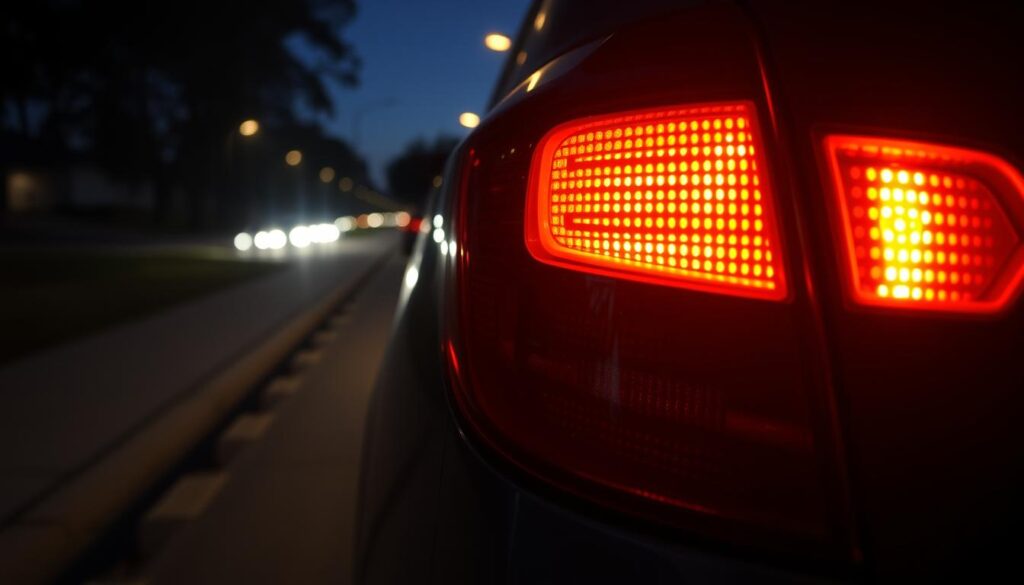
The hallmark is normal pulses for three to four cycles, then fast blinking (hyperflash). The system interprets this as an unstable load on the right side and flags a problem.
Dashboard behavior and quick checks
The dash will show a message exactly when the module detects the abnormal current draw. A quick driveway glance can miss intermittent faults because the lamp may be lit at that moment.
For a more reliable check, observe the rear lamp over multiple cycles. Confirm consistent brightness and that the rear flashes match the front when the dash goes into hyperflash.
| Symptom | Possible cause | Quick check |
|---|---|---|
| Normal then fast blinking | Load mismatch, intermittent contact | Watch several cycles, compare front and back |
| Dash message appears | Module detects abnormal current | Note exact time of message vs. flash rate |
| Bulb lit but issue persists | Bad contact, wrong bulb type, partial filament | Tap housing, check for condensation, test bulb under load |
Secondary clues include lens moisture, flicker when tapping the housing, and failures that follow rain. Many drivers read forum replies and discussion threads, but a stepwise diagnosis is more reliable than swapping a bulb alone.
For related diagnostics on the opposite side, see this left rear turn indicator resource. The next section offers a step-by-step troubleshooting path to replace guesswork with repeatable checks.
Troubleshooting a right rear turn signal problem step-by-step
Start with easy checks. Confirm the correct bulb part number and type for your vehicle. An incorrect bulb can light but draw the wrong load and trigger an indicator message.
Replace both rear bulbs when age is unknown to avoid mismatched loads. The reported case kept hyperflash after one bulb swap, so expect further inspection if the symptom persists.
Inspect the socket for green/white corrosion, heat deformation, loose spring tension, or arcing marks. Any of these can make intermittent contact that shows up only after several flashes.
Check the lens housing gasket for moisture, cracked seals, or condensation. Water speeds corrosion and creates transient shorts or opens.
Verify side marker and shared circuits; a bad ground or a side lamp fault can reflect as a rear problem. Perform a wiggle test on the harness, connectors, and body pass-throughs to reveal chafing or loose pins.
Measure voltage drop and ground integrity at the assembly during flashing. Note that LED conversions or performance modifications may need resistors or reprogramming to stop hyperflash.
When available, use a scan tool to read BCM codes and live data. Stop DIY and seek professional help if faults trace upstream, affect multiple lamps, or suggest BCM output driver damage. When browsing home forums, remember to click expand for wiring diagrams and confirm fixes with service data.
Conclusion
In many cases the vehicle’s monitoring system reports a circuit anomaly instead of a simple lamp outage. The most useful takeaway is that the dash alert usually points to an abnormal electrical load or feedback issue, not just a visibly dim bulb.
Follow the efficient diagnostic order: correct bulb type, check socket condition, inspect for moisture, review shared circuits and side marker lamps, then test harnesses, voltage drop, and grounds. Consider LED or aftermarket effects and confirm with a scan tool if needed.
FAQ
How does a vehicle detect a right rear turn indicator problem and trigger a dash message?
Most modern cars use the body control module (BCM) or a dedicated flasher circuit to monitor bulb load. When the circuit draws less current than expected—due to a burned filament, bad ground, or open connection—the module flags a fault and displays a message. Some vehicles sample the circuit only when the turn signal is active, so the dash alert appears only while signaling.
Why does the blinker sometimes flash normally then start flashing fast?
Fast flashing, or hyperflash, is the BCM’s way of indicating a lower-than-expected load on the circuit. If a bulb intermittently loses contact or the filament is failing, the system may blink normally for a few cycles before detecting the reduced current and increasing flash rate to warn the driver.
How can the light look like it’s working but still trigger a system fault?
Visual operation doesn’t guarantee correct electrical load or reliable grounding. A bulb can glow yet have a poor contact, corroded socket, or partial short that reduces current below the module’s threshold. Also, LED conversions or aftermarket bulbs change the load profile and can cause the BCM to report a failure even though the lamp illuminates.
Why is it important to repair this issue for safety and legal compliance in the United States?
Properly functioning turn signals are a basic safety requirement and part of vehicle code in all states. A faulty rear indicator reduces visibility to other drivers and increases crash risk during lane changes or turns. Fixing the problem avoids citations and ensures your vehicle meets inspection and safety standards.
What are common symptoms drivers see with a right rear indicator fault?
Typical reports include intermittent operation, hyperflash after a few normal blinks, a dashboard “right rear turn indicator failed” message while signaling, and cases where a quick one-person check shows the bulb lighting but the system still flags an error.
If the light blinks normally three to four times then starts blinking fast, what should I check first?
Start with the bulb and socket. Replace the bulb with the correct OEM type and, if possible, swap it with the left rear bulb to see if the fault follows the lamp. Inspect the socket for corrosion, melting, or loose contacts that can cause intermittent load changes.
How can a quick driveway check miss the underlying problem?
A static check with one person can miss intermittent faults. A bulb may light when the connector sits in a certain position or when the contact is temporarily good. The BCM samples electrical conditions over time, so a short-lived contact issue or wiring chafe may not appear during a brief visual test.
Should I replace both rear bulbs even if only the right side shows trouble?
Replacing both bulbs with the correct type is a cost-effective first step. It rules out mismatched bulbs, aging filaments, or differing resistances that confuse the BCM. For LED retrofits, install appropriate load resistors or a CAN-compatible flasher to match factory load.
What signs in the bulb socket indicate corrosion or heat damage?
Look for green or white powdery deposits, darkened or blistered plastic, pitted terminals, or a loose fit. Those signs point to poor contact, higher resistance, and intermittent connectivity—common causes of module-detected failures.
How does moisture in the lens housing affect the turn signal circuit?
Moisture can corrode terminals, create shorts, and reduce insulation resistance. Over time this changes the circuit’s electrical characteristics and can intermittently lower or short the load, triggering a failure message even when the lamp appears to work.
Can shared circuits like side markers cause a rear turn indicator to be flagged?
Yes. Many vehicles share circuits between tail, marker, and turn functions. A fault in a shared circuit—bad ground, corroded splice, or damaged wiring—can alter the turn circuit’s load and lead the BCM to report the rear indicator as failed.
How do I test for intermittent wiring faults like chafed harness points?
Perform a wiggle test while the turn signal is active: gently move the harness, connectors, and junction points to see if the blink rate changes or a fault appears. Inspect routing points where the wire passes through metal or hinges for abrasion, and check connectors for proper fit and pin security.
What voltage and ground checks should I perform at the right rear assembly?
Measure voltage at the bulb socket with the signal on; you should see battery voltage (~12V) on the feed and near-zero volts on the ground pin relative to chassis. Also measure voltage drop across the circuit under load—high voltage drop indicates resistance from a poor connection, corroded terminal, or weak ground.
How do LED conversions or performance modifications cause hyperflash or errors?
LEDs draw far less current than incandescent bulbs. The BCM interprets the reduced current as a failure. Without load resistors or a CAN-bus compatible flasher, the system will hyperflash or set a fault code. Properly designed LED kits or resistors correct the load signature.
When is the flasher or BCM the likely culprit rather than the bulb or wiring?
If you’ve verified good bulbs, sockets, grounds, and wiring but the module still reports a load error, the BCM or flasher circuit may be malfunctioning. Symptoms include multiple unrelated lights flagged, inconsistent diagnostics, or faults that move when the module is retested on another vehicle.
How can a scan tool help pinpoint the failing circuit?
A scan tool with live data and duty-cycle monitoring shows the BCM’s sensed load and any fault codes. It can reveal which circuit the module sees as open or low-current and log intermittent events. This narrows the search to wiring, connectors, or the module itself.
When should I stop DIY and seek professional repair?
Bring the vehicle to a technician if testing shows normal bulbs and sockets but the fault persists, if wiring faults appear upstream in the body harness, or if trailer wiring or aftermarket modules are involved. Professionals have wiring diagrams, pin-level diagnostics, and controlled test equipment to safely isolate complex faults.