Maintaining a Porsche’s transmission is crucial for the vehicle’s overall performance and longevity. Transmission issues can lead to significant problems if not addressed promptly.
Owners of Porsche vehicles may encounter various transmission-related problems, which can be challenging to diagnose and repair without proper knowledge and expertise.
Understanding the importance of proper transmission maintenance and being aware of the common transmission issues that can arise is essential for any Porsche owner.
Key Takeaways
- Regular maintenance is crucial for preventing transmission issues.
- Porsche transmission problems can be complex and require specialized knowledge.
- Prompt diagnosis and repair are essential for minimizing damage.
- Understanding transmission mechanics can help in identifying potential issues early.
- Professional assistance is often necessary for effective transmission repair.
Understanding Porsche Transmission Systems
Porsche’s transmission technology has evolved significantly over the years, offering drivers a range of options tailored to their driving preferences and vehicle specifications. The variety in transmission types is a testament to Porsche’s commitment to innovation and performance.
Types of Porsche Transmissions: Manual, PDK, and Tiptronic
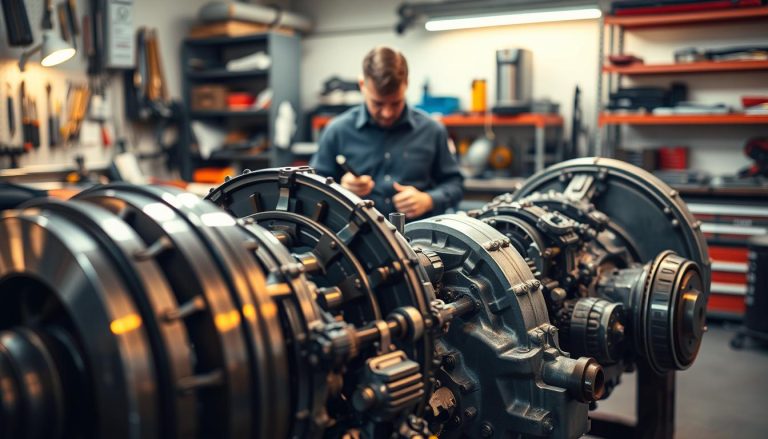
Porsche vehicles are equipped with several transmission types, including manual, PDK (Porsche Doppelkupplung), and Tiptronic. The manual transmission is favored by driving enthusiasts for its direct engagement and control. The PDK transmission, on the other hand, is known for its rapid shifting capabilities and is a favorite among those seeking quick acceleration and seamless gear changes. Tiptronic, an automatic transmission with manual mode, offers a balance between convenience and driver involvement.
Evolution of Porsche Transmission Technology
The evolution of Porsche’s transmission technology has been marked by significant advancements, from the early manual transmissions to the sophisticated PDK and Tiptronic systems of today. This progression reflects Porsche’s dedication to enhancing performance, efficiency, and driving dynamics.
Model-Specific Transmission Characteristics
Different Porsche models are equipped with transmissions tailored to their specific characteristics and performance profiles.
911 Series Transmissions
The 911 Series is known for its dual-clutch PDK transmission, which provides lightning-fast shifts and is optimized for the model’s rear-engine layout.
Cayenne and Macan Transmissions
The Cayenne and Macan SUVs often feature Tiptronic S transmissions, designed to handle the demands of their powerful engines and provide smooth acceleration.
Panamera and Taycan Transmissions
The Panamera and Taycan models boast advanced transmission systems, with the Taycan featuring a fixed-ratio transmission optimized for its electric powertrain.
| Model | Transmission Type | Key Features |
|---|---|---|
| 911 Series | PDK | Dual-clutch, rapid shifting |
| Cayenne/Macan | Tiptronic S | Smooth acceleration, adaptive |
| Panamera/Taycan | Advanced/ Fixed-ratio | Optimized for performance and efficiency |
Porsche Transmission Fault: Common Causes, Diagnosis & Repair
Understanding the common causes of Porsche transmission faults is crucial for effective diagnosis and repair. Transmission issues can manifest in various ways, including slipping, hesitation, or unusual noises. Identifying the root cause is essential to apply the correct fix.
Mechanical Failure Points
Mechanical components are prone to wear and tear, leading to transmission faults. Two primary areas of concern are clutch assembly issues and gear and bearing wear.
Clutch Assembly Issues
The clutch assembly is a critical component in manual and some automatic transmissions. Problems can arise from worn clutch packs, damaged clutch discs, or malfunctioning clutch actuators. Symptoms include slipping, dragging, or failure to engage gears properly.
Gear and Bearing Wear
Gear and bearing wear is another common mechanical issue. As these components wear out, they can cause noise, vibration, or difficulty shifting gears. Regular inspection can help identify these problems early.
Electronic Control Unit Problems
The Electronic Control Unit (ECU) plays a vital role in managing transmission functions. ECU problems can lead to erratic shifting, failure to engage gears, or transmission fallback modes. Diagnosing ECU issues often requires specialized diagnostic tools.
Fluid Degradation and Leakage
Transmission fluid is essential for lubricating components and facilitating smooth shifting. Fluid degradation or leakage can lead to increased wear on transmission components, causing faults. Regular fluid checks and maintenance are crucial to prevent such issues.
| Cause | Symptoms | Solution |
|---|---|---|
| Clutch Assembly Issues | Slipping, dragging, or failure to engage gears | Inspect and replace clutch components as needed |
| Gear and Bearing Wear | Noise, vibration, or difficulty shifting gears | Inspect and replace worn gears and bearings |
| ECU Problems | Erratic shifting, failure to engage gears | Diagnose and repair or replace ECU as necessary |
| Fluid Degradation or Leakage | Increased wear, slipping, or hesitation | Check and replace transmission fluid, repair leaks |
By understanding these common causes of Porsche transmission faults, owners and technicians can diagnose and repair issues more effectively, ensuring the longevity and performance of the vehicle.
Diagnosing Transmission Problems in Your Porsche
Diagnosing transmission issues in your Porsche requires a thorough understanding of the warning signs and symptoms. Early detection is crucial to prevent minor issues from becoming major problems that could lead to costly repairs.
Warning Signs and Symptoms
Porsche transmissions can exhibit several warning signs indicating potential problems. These symptoms can be categorized into several key areas.
Unusual Noises and Vibrations
Unusual noises, such as grinding, whining, or clunking sounds, can be indicative of transmission problems. Similarly, vibrations felt while driving, especially when shifting gears, may signal issues with the transmission’s mechanical components.
Shifting Difficulties and Slippage
Difficulty shifting gears or experiencing slippage between gears can be a sign of transmission fluid degradation, worn clutch packs, or issues with the mechatronic unit. Prompt attention to these symptoms can prevent further damage.
Warning Lights and Error Messages
Modern Porsches are equipped with sophisticated onboard diagnostics. Warning lights or error messages related to the transmission on your dashboard are clear indicators that something is amiss. These alerts can signal a range of issues, from fluid level problems to complex electronic control unit malfunctions.
Using Diagnostic Tools and Equipment
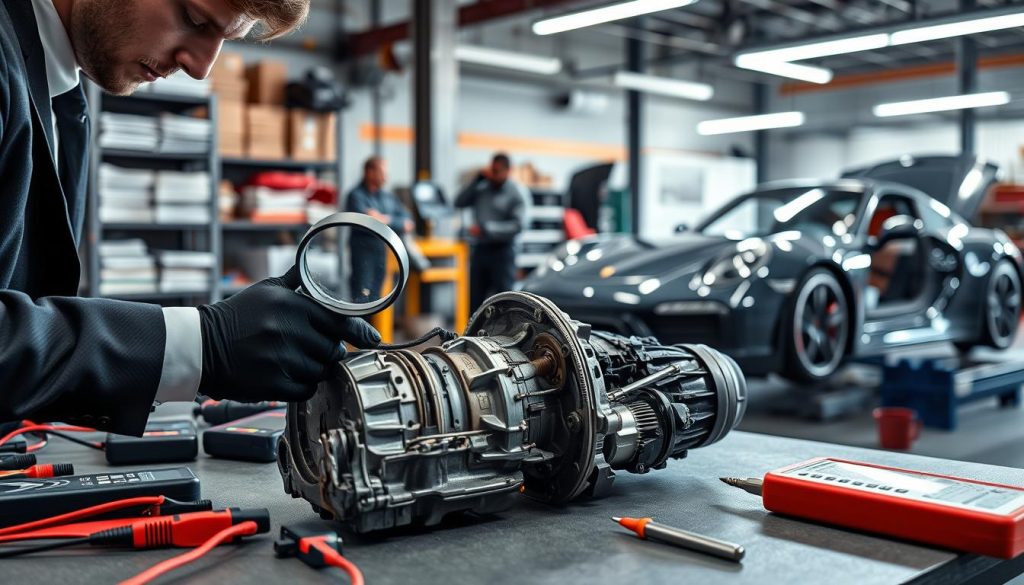
Accurate diagnosis of transmission problems often requires the use of specialized diagnostic tools and equipment. These tools can interface with your Porsche’s onboard computer to retrieve fault codes and provide real-time data on transmission performance.
Interpreting Transmission Fault Codes
Once diagnostic tools have retrieved fault codes, interpreting these codes is crucial for understanding the specific issues affecting your Porsche’s transmission. Knowledge of these codes can help you and your mechanic pinpoint the root cause of the problem.
By understanding the warning signs and utilizing the right diagnostic tools, you can effectively identify and address transmission problems in your Porsche, ensuring your vehicle continues to perform at its best.
Step-by-Step Transmission Repair Procedures
Understanding the intricacies of Porsche transmission systems is crucial for successful repair procedures. The complexity of these systems demands a meticulous approach to diagnosis and repair.
Transmission Fluid Service Process
The transmission fluid service is a critical maintenance task that involves checking the fluid level, condition, and replacing it as necessary. Proper fluid maintenance is essential for the longevity of the transmission.
- Check the transmission fluid level and condition.
- Drain the old fluid and replace it with the recommended type.
- Reset the service interval indicator if applicable.
Replacing Sensors and Electronic Components
Modern Porsche transmissions rely heavily on electronic controls, making the replacement of sensors and electronic components a common repair task. Faulty sensors can lead to incorrect transmission operation.
- Identify the faulty sensor or component.
- Disconnect the electrical connector.
- Remove the sensor or component and replace it with a new one.
Mechatronic Unit Repairs and Replacement
The mechatronic unit is a critical component of modern Porsche transmissions, controlling the shifting and other transmission functions. Repairing or replacing this unit requires specialized knowledge and tools.
| Symptoms | Possible Causes | Repair Action |
|---|---|---|
| Slipping or hesitation | Faulty mechatronic unit | Replace the mechatronic unit |
| Incorrect shifting | Software issue | Update the transmission software |
Clutch Pack and Valve Body Service
The clutch pack and valve body are crucial for the smooth operation of the transmission. Servicing these components involves inspecting, cleaning, or replacing them as necessary.
- Inspect the clutch pack for wear or damage.
- Clean or replace the valve body to ensure proper hydraulic control.
Transmission Software Updates
Transmission software updates are essential for maintaining the optimal performance of the transmission. These updates can resolve issues such as slipping, hesitation, or incorrect shifting.
Regular software updates can improve the overall driving experience and prevent potential problems.
DIY vs. Professional Repairs: Cost and Complexity Analysis
When it comes to Porsche transmission repairs, owners often face a critical decision: whether to attempt DIY repairs or seek professional assistance. This decision hinges on several factors, including the complexity of the repair, the cost implications, and the potential impact on the vehicle’s warranty.
Owner-Serviceable Maintenance Tasks
Porsche owners can perform certain maintenance tasks themselves, such as checking and topping off transmission fluid levels, inspecting for leaks, and updating software when necessary. However, these tasks require a good understanding of the vehicle’s transmission system and the correct procedures to follow.
When to Seek Professional Assistance
For more complex issues, such as mechatronic unit repairs, clutch pack replacement, or diagnosing intricate fault codes, it’s advisable to seek professional help. Professionals have the specialized tools and expertise needed to diagnose and repair complex transmission problems accurately.
Cost Comparison: Dealer vs. Independent Shop vs. DIY
| Service Provider | Typical Cost Range | Warranty Coverage |
|---|---|---|
| Dealership | $500-$2,000 | Yes, manufacturer’s warranty |
| Independent Shop | $300-$1,500 | Variable, shop-dependent |
| DIY | $50-$500 | No, void manufacturer’s warranty |
Warranty Considerations for Transmission Work
It’s crucial to consider the warranty implications of DIY repairs versus professional repairs. While DIY repairs may seem cost-effective, they can void the manufacturer’s warranty, potentially leading to higher costs in the long run if more significant issues arise.
Ultimately, the decision between DIY and professional transmission repairs should be based on a careful assessment of the repair’s complexity, the owner’s level of expertise, and the potential risks and cost implications.
Conclusion
Proper transmission maintenance is crucial for the longevity and performance of your Porsche. By understanding the intricacies of Porsche transmission systems, diagnosing issues, and performing necessary repairs, you can ensure your vehicle runs smoothly.
A well-maintained transmission is vital for optimal performance, fuel efficiency, and overall driving experience. Regular PDK transmission maintenance, including fluid checks and software updates, can help prevent costly repairs down the line.
This guide has provided a comprehensive overview of Porsche transmission maintenance and repair, including common causes of transmission faults, diagnosis techniques, and step-by-step repair procedures. By following the information outlined in this guide, Porsche owners can take a proactive approach to maintaining their vehicle’s transmission.
Effective Porsche transmission maintenance involves a combination of regular servicing, prompt repairs, and a thorough understanding of the vehicle’s transmission system. For complex repairs, seeking professional assistance is recommended to ensure the work is done correctly and efficiently.
FAQ
What are the most common signs of Porsche transmission problems?
Common signs include unusual noises, vibrations, shifting difficulties, slippage, and warning lights or error messages on the dashboard.
How often should I service my Porsche’s transmission fluid?
The recommended interval varies by model, but typically ranges from 30,000 to 60,000 miles. Consult your owner’s manual or speak with a Porsche dealership or certified mechanic for specific guidance.
Can I perform transmission repairs on my Porsche myself?
While some maintenance tasks, such as checking transmission fluid levels, can be done by the owner, more complex repairs often require specialized tools and expertise. It’s recommended to seek professional assistance for major transmission work.
What is the difference between a PDK and Tiptronic transmission in Porsche vehicles?
PDK (Porsche Doppelkupplung) is a dual-clutch transmission, while Tiptronic is a traditional automatic transmission with a torque converter. PDK transmissions are known for their quick shifting and are often used in high-performance Porsche models.
How do I know if my Porsche’s transmission issue is related to the Electronic Control Unit (ECU)?
If your Porsche is displaying error messages or warning lights related to the transmission, it may indicate an ECU issue. Diagnostic testing with a Porsche-specific scan tool can help determine the cause.
Are transmission software updates necessary for my Porsche?
Yes, transmission software updates can improve performance, fix issues, and enhance overall driving experience. Consult with a Porsche dealership or certified mechanic to determine if an update is available and recommended for your vehicle.
Can I void my Porsche’s warranty by performing DIY transmission repairs?
Yes, performing DIY repairs or modifications can potentially void your warranty. It’s essential to review your warranty documentation and consult with a Porsche dealership or certified mechanic before attempting any major repairs.
How do I choose between a dealership, independent shop, or DIY for my Porsche transmission repair?
Consider factors such as cost, expertise, and warranty implications when deciding. Dealerships offer factory-trained technicians and genuine parts, while independent shops may provide more competitive pricing. DIY repairs can be cost-effective but require specialized knowledge and tools.