Engine cooling systems play a crucial role in maintaining optimal vehicle performance. Overheating can lead to significant engine damage, making an efficient cooling system indispensable. Two popular solutions for engine cooling are the flex fan and the clutch fan, each with its unique characteristics and benefits.
The choice between these two types of fans can significantly impact cooling efficiency. Understanding their differences is essential for selecting the right cooling solution for your vehicle. As we delve into the comparison between flex fans and clutch fans, it becomes clear that the right choice depends on various factors, including vehicle type, driving conditions, and performance requirements.
Key Takeaways
- Efficient engine cooling is critical for vehicle performance.
- Flex fans and clutch fans are two distinct solutions for engine cooling.
- The choice between them affects cooling efficiency.
- Understanding their differences is key to selecting the right fan.
- Vehicle type, driving conditions, and performance needs influence the choice.
Understanding Engine Cooling Fans
Effective engine cooling is vital for ensuring the longevity and efficiency of a vehicle’s engine. Engine cooling fans are a crucial component of the cooling system, playing a significant role in maintaining optimal engine temperatures. For a deeper dive into the specifics of cooling fans, including the differences between flex fans and clutch fans, visit Flex Fan vs Clutch Fan: The Ultimate Cooling System.
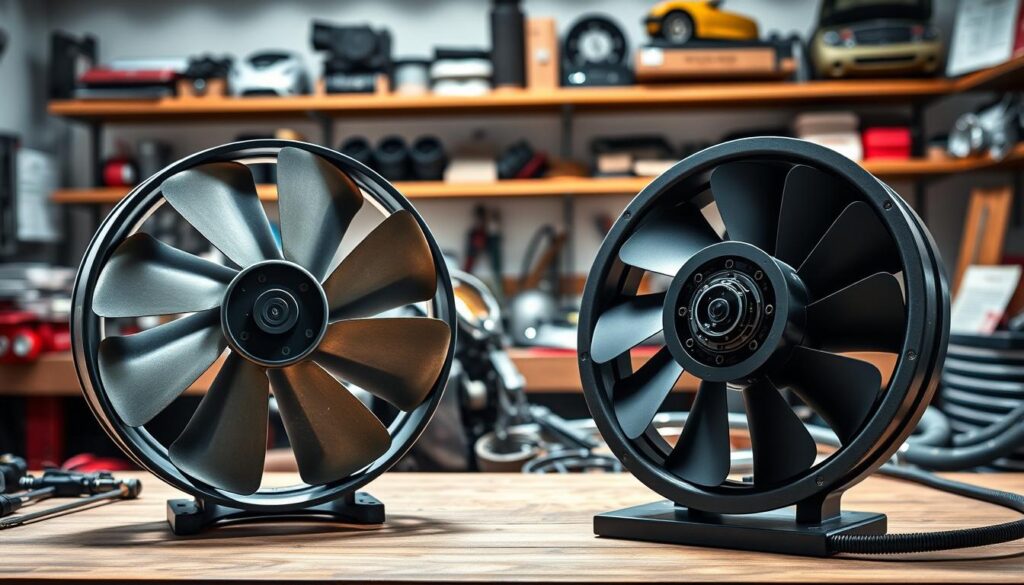
The Critical Role of Cooling Systems in Vehicle Performance
The cooling system is essential for engine performance, as it prevents overheating, which can lead to significant engine damage. A well-functioning cooling system ensures that the engine operates within its optimal temperature range, thereby enhancing cooling efficiency and overall vehicle performance.
Overheating can result in costly repairs, including damage to the engine block, cylinder head, or other critical components. Moreover, an efficient cooling system contributes to better fuel economy and reduced emissions, making it a vital aspect of modern vehicle design.
Evolution of Automotive Cooling Technology
Automotive cooling technology has evolved significantly over the years, driven by advances in materials science and mechanical engineering. Early cooling systems were relatively simple, relying on basic fans and radiators. However, modern cooling systems incorporate sophisticated technologies, including electronic cooling fans and advanced radiator designs.
These advancements have improved cooling efficiency, reduced noise levels, and enhanced overall engine performance. The development of more efficient cooling systems has also enabled the creation of more powerful engines, which are capable of delivering better performance while maintaining reliability.
Flex Fan Vs Clutch Fan: Which is the Ultimate Choice for Your Engine’s Cooling
Flex fans and clutch fans are two distinct technologies used in engine cooling systems, each with its unique advantages. The choice between these two fans is crucial for optimal engine performance and longevity.
What is a Flex Fan? Design and Operation
A flex fan is designed to provide optimal airflow while minimizing the load on the engine. Its blades are flexible and change pitch as they spin, allowing for more efficient cooling at lower engine speeds. The flexible design enables the fan to move more air when it’s needed most, typically at lower speeds.
The operation of a flex fan is straightforward; it is typically driven directly by the engine’s serpentine belt. As the engine speed increases, the fan blades flex, reducing their pitch and subsequently the load on the engine. This mechanism ensures that the fan doesn’t consume too much power when the engine is running at higher speeds.
What is a Clutch Fan? Mechanism and Function
A clutch fan, on the other hand, uses a more complex mechanism involving a thermal clutch that engages and disengages the fan based on the temperature of the air coming off the radiator. When the engine is cold or the ambient temperature is low, the clutch disengages, allowing the fan to freewheel and thus reducing the load on the engine.
As the engine warms up, the thermal clutch engages, coupling the fan to the engine’s drive system. The fan then spins at a speed proportional to the engine speed, providing the necessary cooling. The thermal clutch is a critical component, as it ensures that the fan operates efficiently across various driving conditions.
Core Technological Differences
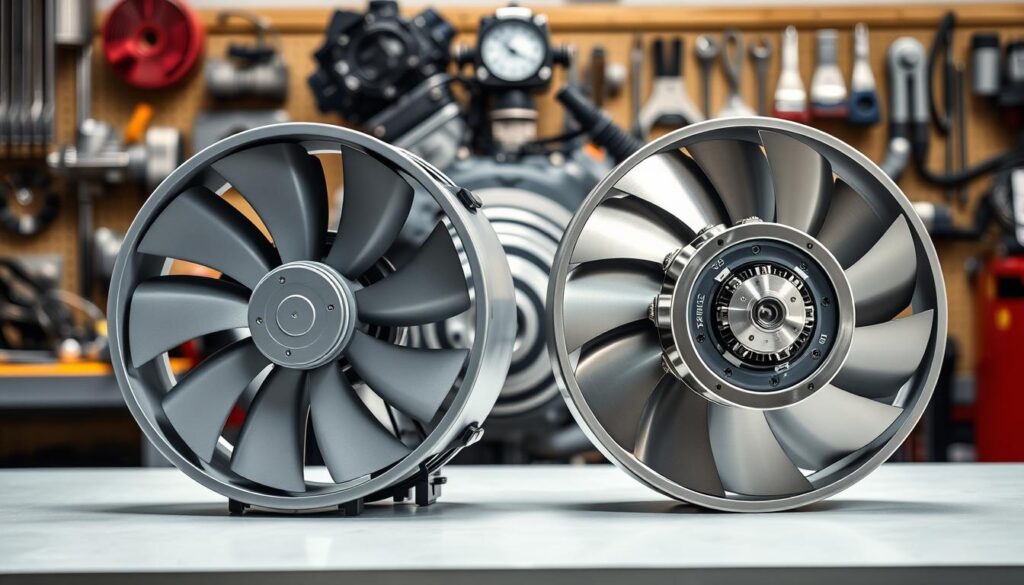
The primary difference between flex fans and clutch fans lies in their operating principles and the technology used to control their operation. Flex fans rely on their flexible blade design to adjust airflow, while clutch fans use a thermal clutch to engage or disengage the fan.
| Feature | Flex Fan | Clutch Fan |
|---|---|---|
| Operating Principle | Flexible blades adjust pitch with engine speed | Thermal clutch engages/disengages fan based on temperature |
| Complexity | Generally simpler, fewer components | More complex due to thermal clutch mechanism |
| Efficiency | Efficient at lower engine speeds | Efficient across various temperatures |
This comparison highlights the unique characteristics of each fan type, helping vehicle owners make an informed decision based on their specific needs and driving conditions.
Performance Comparison: Efficiency, Noise, and Power Draw
The debate between flex fans and clutch fans centers around their efficiency, noise levels, and power consumption. Both types of fans have their unique advantages and disadvantages, which are crucial in determining their suitability for different driving conditions and vehicle types.
Cooling Efficiency Across Different Driving Conditions
Cooling efficiency is a critical parameter in evaluating the performance of engine cooling fans. Flex fans are designed to adapt their pitch according to the engine speed, providing a flexible cooling solution that can be effective across various driving conditions. On the other hand, clutch fans engage and disengage based on the engine temperature, offering a more traditional approach to cooling.
In stop-and-go traffic, flex fans can provide consistent cooling due to their ability to adjust airflow. Conversely, clutch fans might be more effective during high-speed driving as they can fully engage to provide maximum cooling when needed.
Noise Levels and Vibration Characteristics
Noise levels and vibration are significant factors that contribute to the overall driving experience. Flex fans tend to be quieter during low-speed operations due to their design, which reduces the noise output. However, they can sometimes produce more vibration, especially if not properly balanced.
Clutch fans, while potentially noisier due to their mechanical engagement and disengagement, can offer smoother operation when properly maintained. It’s essential for vehicle owners to consider these factors, especially if they’re looking for a quieter ride. For more information on reducing noise from car cooling fans, you can visit this resource.
Impact on Engine Performance and Fuel Economy
The choice between flex fans and clutch fans also affects engine performance and fuel economy. By maintaining optimal engine temperatures, both types of fans contribute to better engine performance. However, the power draw from these fans can impact fuel economy.
Flex fans, due to their design, might consume more power when operating at higher speeds, potentially affecting fuel economy. Clutch fans, by engaging only when necessary, can sometimes offer better fuel efficiency, especially during highway driving conditions.
In conclusion, the performance comparison between flex fans and clutch fans reveals that each has its strengths and weaknesses. Vehicle owners should consider their specific needs, including typical driving conditions, to make an informed decision.
Practical Considerations for Vehicle Owners
The choice between a flex fan and a clutch fan is not straightforward and depends on several key considerations, including vehicle compatibility and long-term maintenance costs. Vehicle owners must weigh these factors to make an informed decision that meets their specific needs.
Vehicle Compatibility and Application Scenarios
When it comes to vehicle compatibility, both flex fans and clutch fans have their own set of suitable applications. Flex fans are generally more adaptable to a variety of vehicles, particularly those with tighter engine compartments. They are designed to operate effectively at lower speeds, making them suitable for city driving and stop-and-go traffic.
In contrast, clutch fans are often preferred for high-performance vehicles or those that frequently operate at high speeds. Their ability to engage and disengage based on engine temperature makes them efficient for highway driving.
Installation Complexity and Maintenance Requirements
The installation process for both types of fans can vary significantly. Flex fans are typically easier to install due to their simpler design and fewer components. Clutch fans, on the other hand, involve more complex mechanisms, including the clutch assembly, which can complicate the installation process.
Maintenance requirements also differ between the two. Flex fans generally require less maintenance since they have fewer moving parts. Clutch fans, with their clutch mechanism, may need more frequent checks and potential replacements, adding to their overall maintenance cost.
Cost Analysis: Initial Investment vs. Long-term Value
When evaluating the cost, it’s essential to consider both the initial investment and the long-term value. The following table provides a comparative analysis:
| Fan Type | Initial Cost | Maintenance Cost | Long-term Value |
|---|---|---|---|
| Flex Fan | $100-$300 | Low | High |
| Clutch Fan | $200-$500 | Moderate to High | Moderate |
Ultimately, the decision between a flex fan and a clutch fan should be based on a thorough analysis of these practical considerations, ensuring that vehicle owners choose the best option for their specific needs and driving conditions.
Conclusion
When deciding between a flex fan and a clutch fan for your vehicle’s engine cooling system, several factors come into play. The comparison between flex fan vs clutch fan reveals distinct advantages and disadvantages for each type, influencing the ultimate choice based on specific needs and driving conditions.
A flex fan offers simplicity and cost-effectiveness, making it a suitable option for certain vehicle applications. On the other hand, a clutch fan provides more precise control over cooling, potentially leading to better engine performance and fuel efficiency in various driving scenarios.
The ultimate choice between these two fans depends on vehicle compatibility, driving habits, and performance requirements. By considering these factors and understanding the core differences between flex fans and clutch fans, vehicle owners can make an informed decision that optimizes their engine’s cooling and overall performance.
Effective engine cooling is crucial for maintaining vehicle health and performance. Whether you opt for a flex fan or a clutch fan, ensuring the chosen cooling solution meets your engine’s specific needs is essential for achieving optimal engine cooling.
FAQ
What is the primary function of a cooling fan in a vehicle’s engine?
The primary function of a cooling fan is to cool the engine by drawing air through the radiator to prevent overheating, thus maintaining optimal engine performance and longevity.
How does a flex fan differ from a clutch fan in terms of operation?
A flex fan is designed to flex or change its pitch as the engine speed changes, providing varying airflow. In contrast, a clutch fan engages and disengages based on engine temperature, using a mechanical clutch to control its operation.
Which type of fan is more efficient in terms of cooling performance?
The efficiency of a flex fan versus a clutch fan depends on the specific application and driving conditions. Flex fans are generally more efficient at lower speeds, while clutch fans can be more effective at higher engine speeds.
Are there any significant differences in noise levels between flex fans and clutch fans?
Yes, there are differences. Clutch fans tend to be noisier when engaged, as they can produce a distinct sound due to the mechanical clutch. Flex fans, being more straightforward in design, typically produce less noise.
How do flex fans and clutch fans impact fuel economy?
The impact on fuel economy varies. Flex fans generally have less drag on the engine, potentially improving fuel economy, especially in city driving or lower-speed conditions. Clutch fans, when disengaged, also reduce drag, but their engagement can momentarily affect fuel efficiency.
What are the key considerations for choosing between a flex fan and a clutch fan for my vehicle?
Key considerations include vehicle compatibility, typical driving conditions, desired cooling efficiency, noise preferences, and maintenance or replacement costs. Understanding these factors can help in making an informed decision.
Can I retrofit my vehicle with a different type of cooling fan?
Retrofitting is possible but requires careful consideration of compatibility, installation complexity, and potential performance impacts. It’s advisable to consult with a professional mechanic to ensure a suitable and effective modification.
What maintenance is required for flex fans and clutch fans?
Both types require regular inspection for wear and damage. Clutch fans, with their mechanical clutch, may need additional checks on the clutch mechanism. Proper maintenance ensures optimal performance and longevity.