Seeing shiny vertical marks on a borescope can trigger panic. Many owners search that exact phrase after spotting lines or hearing a light tick in their engine. In plain terms, cylinder scoring means wear down the inner wall of a bore that can affect ring sealing and oil control.
Compression or leakdown tests may look normal even when bore scoring exists. That makes early damage easy to miss, especially on platforms like Porsche M96/M97 where failures hide behind decent test numbers.
This guide sets realistic expectations. There rarely is a single numeric threshold a DIYer can verify. Instead, use a decision framework based on symptoms, oil condition, trend data, and known failure patterns for the engine in question.
We will show when to monitor and when to stop driving. Expect real-world examples from flat-six Porsche cases and a modern turbo BMW track/knock scenario. Later sections cover borescope limits, oil and filter checks, caveats for compression tests, and acoustic diagnosis so you avoid replacing random parts.
Key Takeaways
- Visible marks may be cosmetic or the start of a progressive wear problem.
- Normal compression does not rule out early bore scoring.
- Assess oil debris, trends, and platform history before deciding.
- Use borescope, oil/filter inspection, and acoustic checks together.
- When in doubt, prioritize data-driven repair planning over guesswork.
What Cylinder Scoring Looks Like and Why It Matters in Modern Engines
Vertical scuffs low in the bore often begin near bottom dead center and can hide from quick checks. That pattern contrasts with the smooth crosshatch left by proper honing. Visible lines that run vertically point to localized contact, not simple polish.
Recognizing normal wear vs vertical marks
Normal finish shows even crosshatch and a light sheen from piston rings. Deep vertical scratches break oil film and hurt ring seal.
Mechanical sources of vertical scuffs
Piston skirt contact or a shifted ring pack can rub repeatedly in the same track. Local oil loss lets metal-on-metal messages form fast.
Why a running engine can still feel strong
Early damage may not cut compression. Oil can temporarily mask poor sealing while abrasive particles spread through the sump.
Combustion byproducts and the dirty-oil loop
Loss of ring seal lets fuel and carbon enter oil. That contamination lowers viscosity and accelerates abrasive wear, turning one bore problem into broader internal damage.
How Much Cylinder Scoring is Acceptable?
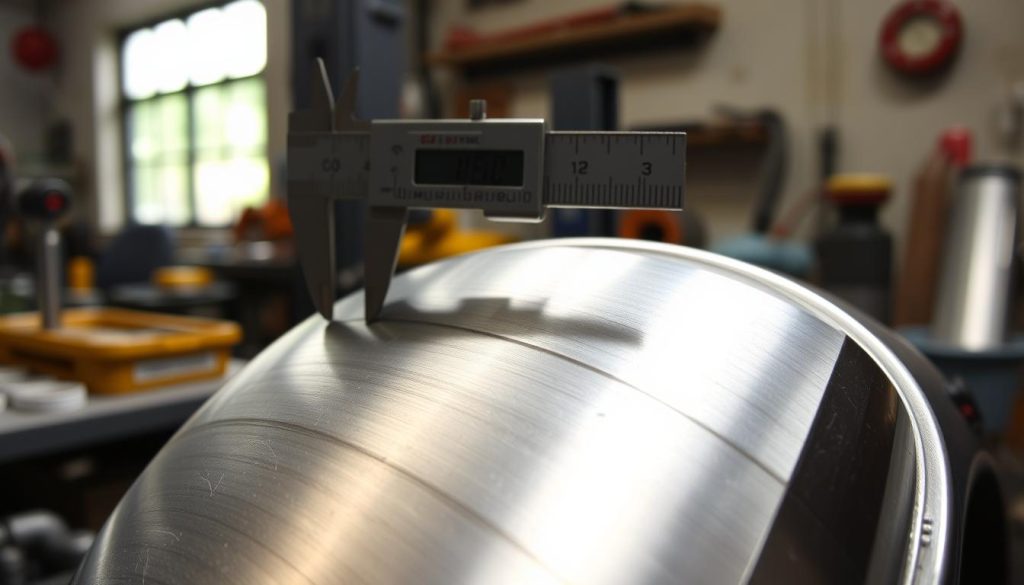
Visible bore marks don’t always demand an engine teardown; context and trend matter more. Define acceptable bore scoring as a risk-managed judgment: either stable and monitorable, or active and likely to worsen.
Monitoring versus immediate teardown
Monitor when symptoms are minimal, oil analysis shows no rising debris, and noise does not trend worse. Track oil condition, consumption, and borescope images over time.
Plan teardown when you see deep, repeating vertical marks, rising metal counts in filter checks, or sudden jumps in oil consumption. In severe cases, consumption may reach extreme rates (reports up to 1 liter per 100 miles).
Why tests can mislead
Compression and leakdown give useful data but can be fooled. Oil pooling in the bore can temporarily mask ring seal loss on some designs. Treat compression as only one data point.
Decision notes for other platforms
- For tuned turbo engines, confirm root causes after heat or detonation before more track time.
- If oil consumption shifts from normal variation to excessive oil consumption, move from monitoring to repair planning.
High-Risk Scenarios and Vehicles Where Bore Scoring Is Commonly Misdiagnosed
Certain engine designs hide early bore wear behind normal-running behavior and benign test numbers. That concealment leads owners down the wrong repair path.
Porsche hotspots:
- 1999–2004 996 (non-Turbo/GT3)
- 2005–2008 997.1 Carrera and Carrera S
- 2006–2008 987.1 Cayman S and 2007–2008 Boxster S
- Note: Turbo and GT3 variants, plus base 987.1 models, are not commonly implicated in the cited field data.
Why misdiagnosis happens
These Porsche engines can run smooth while showing early symptoms that mimic valvetrain trouble. Compression and simple checks stay near normal. That pattern makes engine failure appear as a top-end parts problem.
Northern operation and repeated short trips also raise risk. Cold starts, salt, and water exposure form a pattern seen in field data that increases wear on m96 m97 platforms.
Outside Porsche, track heat, detonation, and aggressive tuning speed up damage. A hot day can trigger super knock codes on a tuned BMW, turning a track session into rapid engine damage.
Watch for misleading signs: a lifter-like tapping rhythm and a single sooty tailpipe often push owners to replace valvetrain parts. In many cases the true culprit lies deeper in the bore.
Platform context matters: the same noises, soot, or light marks can mean very different urgency depending on the engine and its known failure modes.
How to Diagnose Cylinder Scoring Without Guessing or Replacing Random Parts
Begin with targeted listening to pinpoint whether the sound comes from the top end or deeper inside. A measured approach saves time and avoids unnecessary purchases.
Use an “electronic ear” to localize noise
An electronic ear or chassis ear helps separate valve train noise from deeper bore or bearing noise. Clip probes to valve covers, block, and exhaust and compare patterns while the engine runs at idle and under light load.
Experience matters: scoring and valvetrain taps have distinct tones and timing. Get a second opinion if unsure.
Borescope best practices and blind spots
A visual check helps but has limits. Early bore wear may start near bottom dead center where the piston blocks the view.
Use angled lighting and record stills at multiple piston positions. No visible damage on a scope does not prove the bore is flawless.
Oil and filter inspection
Check the oil and filter before replacing parts. Shiny, non-magnetic aluminum flakes suggest early skirt or ring wear. Ferrous gray particles point to advanced, harder wear stages.
- Smell for fuel dilution and check for extremely black, thin-feeling oil.
- Note viscosity loss or unusual oil consumption trends.
- Document findings and repeat sampling to spot trends.
AOS replacements and late symptoms
Replacing an air/oil separator often masks symptoms but rarely fixes mechanical wear. Treat that replacement as a diagnostic step, not a cure.
Late warning signs include misfires (P0300), catalyst efficiency faults, and O2 fouling. Do not wait for those codes before acting on clear visual or oil evidence.
What to Do Next: Monitoring, Maintenance, or Engine Repair Options
A measured plan — monitor, maintain, or rebuild — saves money and prevents larger engine failures.
When careful monitoring may be reasonable and what to track
Monitor only if symptoms are mild and data stays steady. Track oil levels, oil consumption, and fuel dilution in engine oil.
Repeat oil/filter inspections, document borescope images, and log noise changes. Trend compression and leakdown tests but treat them as supporting data.
Why continued driving raises collateral risk
Running a scored bore circulates abrasive debris. That grit accelerates wear on bearings, timing chains, and other parts.
Fuel-contaminated oil loses protection and lets damage spread from one cylinder to multiple engines components.
Repair reality for severe cases
Severe scoring needs complete disassembly and machining. Additives and single-part swaps rarely fix internal engine damage.
For Porsche M96/M97 rebuilds, LN Engineering Nickies replace original bores with Nikasil-plated cylinders for durable long-term results. Steel sleeves are generally discouraged due to different thermal expansion and fit/noise issues.
Practical maintenance to slow progression
- Follow strict oil change intervals and use correct grade oil.
- Avoid detonation and manage track heat.
- Document trends and move to repair planning if oil consumption becomes excessive.
Conclusion
Deciding if visible marks need repair depends on trend data and oil evidence.
Acceptable bore evaluation rests on whether wear is active and supported by oil or noise trends. Combine sound localization, borescope checks (note the bottom-dead-center blind spots), and engine oil/filter inspection before drawing conclusions.
Porsche M96/M97 owners: early faults can run with normal compression. Waiting for late symptoms often raises repair scope and cost.
On track cars, detonation or heat events may link directly to bore damage. Fix knock control, fueling, and cooling before returning to heavy use.
Quick action checklist: monitor with documented data, reduce load and tighten maintenance intervals if unsure, and schedule professional inspection or rebuild when debris or worsening symptoms appear.
Bore scoring is a known engine failure mode in some platforms. Early, evidence-based steps produce the best long-term outcome. For related misfire and diagnostic notes, see cylinder misfire guide.
FAQ
What does bore scoring look like and why does it matter in modern engines?
Bore scoring appears as vertical scratches or grooves on the cylinder wall when viewed with a borescope or during teardown. It matters because those marks interrupt the oil film and sealing function of piston rings, increasing oil consumption, raising blow-by, and accelerating wear to pistons and rings. In modern aluminum-block engines with thin liners, even modest scoring can lead to rapid deterioration of compression and emissions performance.
How do piston skirts and rings create vertical scoring?
Piston skirts and rings can score bores when abrasive particles, metal debris, or excessive blow-by get trapped between moving surfaces. Poor ring sealing lets combustion gases push oil and particulates into contact with the cylinder wall, while directional movement of the skirt and ring edges produces the characteristic vertical scratches.
Can an engine run “perfectly” and still have significant scoring?
Yes. Early scoring may not immediately affect idle, drivability, or basic compression numbers. Engines can show normal running behavior while scoring progresses beneath the oil film. That’s why visual inspection, oil analysis, and monitoring oil consumption are essential alongside performance checks.
How do combustion byproducts and fuel dilution make scoring worse?
Combustion residues, soot, and fuel dilution thin and contaminate engine oil, reducing its lubricating and anti-wear properties. Diluted oil loses viscosity, allowing metal-to-metal contact and permitting abrasive particles to cut the bore more easily, which accelerates scoring and related failures.
What does “acceptable bore scoring” mean in practice?
Acceptable scoring is the condition where marks are superficial, do not penetrate the honing plateau, and do not cause rising oil consumption, measurable compression loss, or metal debris in the oil. In practice, acceptance means monitoring with regular oil checks, borescope photos, and tracking oil usage instead of immediate teardown.
When is visible scoring a red flag even if compression looks fine?
Visible grooves near the top ring travel, heavy vertical scratches, or any evidence of aluminum or ferrous flakes in the oil are red flags. Even with normal compression, those signs predict rapid future failure and usually justify teardown or at minimum removing the cylinder head and inspecting the bores closely.
Why can compression and leakdown tests be misleading on M96/M97-style engines?
M96 and M97 Porsche engines often mask early bore damage because ring sealing can remain adequate for a time and oil can temporarily fill scratched areas. Leakdown and compression tests may stay within limits until wear reaches a critical depth, delaying detection of destructive wear processes unique to these engines.
How does rising oil consumption change the decision from monitoring to repair?
A steady increase in oil use, visible smoke from the tailpipe, or a sudden jump in consumption signals that scoring has compromised ring sealing. When consumption exceeds manufacturer tolerances or accelerates quickly, repair becomes the prudent option to avoid secondary damage to bearings, chains, and the catalytic converter.
Which Porsche models and platforms are commonly affected by bore scoring?
Porsche 996, early 997 (997.1), and 987.1 Boxster/Cayman models with M96 and M97 engines are well-known hotspots. These engines experienced design and material vulnerabilities that made them more susceptible to bore damage, especially under certain operating histories.
How do climate and operating history influence scoring risk?
Northern climates with frequent cold starts, short trips, and salt exposure increase condensation and fuel dilution, accelerating wear. Low-mileage use with many cold-start cycles can be worse than steady highway miles because the engine rarely reaches full operating temperature to burn off contamination.
Can track use, detonation, or aggressive tuning accelerate scoring on other platforms?
Yes. High thermal loads, detonation, and enriched fuel mixtures or aggressive timing can create excessive blow-by, higher soot levels, and altered oil condition. Those factors raise the chance of abrasive contact between rings and bores, speeding up scoring on a wide range of engines.
How can “lifter-like” noises and sooty tailpipes mislead diagnosis?
Lifter or valvetrain noises and sooty exhaust often point technicians toward the wrong subsystem. Scoring can create similar audible signatures and rich-running symptoms by increasing oil burning and fouling O2 sensors. Accurate diagnosis requires borescope inspection and oil analysis rather than assuming a valve or injector issue.
How effective is an electronic stethoscope for separating scoring noise from valvetrain issues?
An electronic ear helps isolate sound sources and can strongly suggest whether noise originates from the top end or lower in the block. It’s a rapid, low-cost tool that, combined with other checks, reduces guesswork and unnecessary parts replacement.
What are the limits of borescope inspections for early scoring detection?
Borescopes can miss damage near bottom dead center (BDC) or beneath oil film and ring edges. Early, shallow scratches or areas hidden by carbon deposits might not be obvious. Repeated borescope checks and strategic piston ring positioning improve detection.
What should I check in the oil and filter for signs of cylinder damage?
Inspect filters for aluminum flakes, shiny metallic particles, or a high concentration of dark soot. Oil lab analysis can detect elevated ferrous wear metals, diluted fuel, and viscosity loss. Those findings strongly suggest active bore or piston wear.
What specific oil conditions point to scoring or ring failure?
Extremely black oil, sudden viscosity drop, elevated iron or aluminum readings, and solvent-like smell from fuel dilution are key indicators. These change the risk profile and push toward mechanical inspection rather than continued monitoring.
Why don’t air/oil separator replacements always fix the root problem?
Replacing separators can reduce crankcase pressure and oil carryover but won’t repair existing bore damage. If rings, pistons, or cylinder walls are already compromised, the separator only treats a symptom and leaves the failure mode unchecked.
Which symptoms usually show up late in the scoring process?
Late signs include persistent misfires, catalytic converter efficiency codes, fouled oxygen sensors, blue smoke on acceleration, and sudden spikes in oil consumption. By then collateral damage to bearings and exhaust hardware is common.
When is monitoring reasonable and what data should I track?
Monitoring is reasonable for superficial scoring with no metal debris and stable oil use. Track oil consumption per 500–1,000 miles, borescope images at intervals, oil analysis results, and any changes in power, smoke, or emissions codes.
Why does continued driving with scoring risk further internal damage?
Scoring increases metal particulates in the oil stream, which abrade bearings, cam lobes, and timing components. The contamination circulates, causing secondary failures that are more expensive and complex to repair than addressing the cylinder damage early.
What does repair for severe cylinder scoring typically involve?
Severe scoring usually requires complete disassembly, assessment of pistons and rings, cylinder honing or sleeve installation, and replacement of damaged bearings and gaskets. Machines and parts must meet exact tolerances; intermittent fixes rarely restore durability.
What is the recommended Porsche-specific rebuild approach?
For affected M96/M97 engines, a common approach is full teardown, inspection of block and crank, and careful selection of replacement pistons and rings. LN Engineering pistons and ring packages are often recommended by specialists, while steel sleeves are generally discouraged due to differing thermal behavior in aluminum blocks.