Refueling your Porsche is an essential part of car ownership, but have you ever struggled with accessing the fuel door? Understanding how to release the gas tank is a simple yet crucial aspect of owning a Porsche. In this article, we’ll walk you through the straightforward process, making it easy to refuel your vehicle.
The process of unlocking the gas tank is designed to be intuitive, ensuring that you can focus on enjoying your drive rather than struggling with the mechanics of your vehicle. By the end of this guide, you’ll be familiar with the steps to Porsche refueling, making the entire experience hassle-free.
Key Takeaways
- Understanding the Porsche fuel door mechanism is crucial for easy refueling.
- The gas tank release process is designed to be simple and intuitive.
- Following the steps outlined will make Porsche refueling hassle-free.
- Knowing how to access the fuel door enhances your overall Porsche ownership experience.
- Easy refueling allows you to focus on enjoying your drive.
Understanding Your Porsche’s Fuel System
Understanding the intricacies of your Porsche’s fuel system can enhance your overall driving experience, starting with the cleverly designed fuel door. The fuel system is a critical component of your vehicle, and its design reflects Porsche’s commitment to innovation and performance.
The Engineering Behind Porsche Fuel Doors
Porsche’s fuel doors are engineered with a focus on both aesthetics and functionality. The unique fuel door mechanism is designed to provide a seamless refueling experience while maintaining the vehicle’s sleek design. This mechanism involves a combination of electronic and mechanical components that work together to ensure smooth operation.
Why Porsche Uses a Unique Fuel Door Mechanism
The use of a unique fuel door mechanism in Porsche vehicles serves several purposes. It enhances the vehicle’s overall design by integrating the fuel door into the bodywork, creating a streamlined appearance. Additionally, this mechanism helps to prevent unauthorized access to the fuel tank, adding a layer of security.
By understanding how your Porsche’s fuel system works, you can appreciate the attention to detail and engineering that goes into every aspect of your vehicle, from the fuel door to the engine itself.
Different Gas Tank Mechanisms Across Porsche Models
Porsche offers a diverse range of models, each with its unique fuel door mechanism. This diversity reflects the brand’s commitment to innovation and customer experience. Understanding these differences is essential for Porsche owners to ensure they can access their gas tank efficiently.
911 and 718 Series Fuel Door Operation
The 911 and 718 series are known for their sporty design and performance. The fuel door release mechanism in these models is typically located on the driver’s door or on the dashboard. Pressing the fuel door release button opens it, allowing access to the gas tank.
Cayenne and Macan Fuel Access Systems
The Cayenne and Macan, being SUV models, have a slightly different approach to fuel door operation. The release mechanism for these models is often found on the driver’s door or near the fuel door itself. The electronic release system makes it convenient to refuel.
Panamera and Taycan Fuel Door Specifics
The Panamera and Taycan, representing Porsche’s luxury and electric segments, feature advanced fuel door systems. The Panamera’s fuel door release is typically electronic, while the Taycan, being electric, has a charging port that operates similarly.
Across these models, Porsche has implemented various designs to ensure ease of use and aesthetic appeal. Familiarizing oneself with the specific mechanism of their Porsche model is key to a hassle-free refueling experience.
Preparing to Refuel Your Porsche
Before you start refueling your Porsche, it’s crucial to prepare your vehicle properly. This preparation ensures a safe and smooth refueling process.
Parking Considerations for Safe Refueling
When parking your Porsche to refuel, make sure it’s on a level surface and apply the parking brake. This prevents any accidental movement during refueling.
Engine Status Requirements
It’s generally recommended to turn off the engine before refueling. This reduces the risk of ignition sources near the fuel nozzle.
Items You’ll Need for Refueling
You’ll need the fuel cap key (if your Porsche has a locking fuel cap) and to know the correct fuel type for your vehicle. Refer to your owner’s manual for specifications.
| Item | Purpose |
|---|---|
| Fuel Cap Key | To unlock the fuel cap |
| Owner’s Manual | To check the recommended fuel type |
How to Open Gas Tank on Porsche: The Basic Method
Opening the gas tank on your Porsche is a straightforward process that can be mastered with a few simple steps. Understanding the basic method is crucial for any Porsche owner to ensure safe and efficient refueling. The process involves a combination of electronic and mechanical components.
Universal Techniques That Work Across Models
Most Porsche models feature a fuel door release mechanism located inside the vehicle. To open the gas tank, you’ll typically need to activate this release button. The button is often found on the driver’s side door sill or on the center console.
- Locate the fuel door release button inside your Porsche.
- Press the button to electronically release the fuel door.
- Push the fuel door to open it, then unscrew the gas cap.
When to Use the Manual Override
In some situations, you may need to use the manual override to open the gas tank. This is typically required if there’s an electronic failure or if the vehicle is in a specific mode (e.g., transport mode). The manual override is usually located in the trunk or under the floor panel.
Key steps for manual override:
- Locate the manual override cable or lever.
- Pull the cable or activate the lever to release the fuel door.
- Open the fuel door manually.
Understanding Indicator Lights
Porsche vehicles are equipped with indicator lights that signal when the fuel door is open or if there’s an issue with the fuel system. Understanding these lights is crucial for safe refueling. If the fuel door indicator light is flashing or remains on, it may indicate a problem that needs to be addressed.
By following these basic steps and understanding the universal techniques, manual override, and indicator lights, you’ll be able to open the gas tank on your Porsche with ease. Remember to always refer to your owner’s manual for model-specific instructions.
Step 1: Locate the Fuel Door Release
The first step in opening your Porsche’s gas tank is identifying the fuel door release button. This mechanism is designed to provide easy access to the fuel tank while maintaining the vehicle’s sleek design.
Common Locations of the Release Button
Most Porsche models have the fuel door release button located on the driver’s side door panel or on the center console. It’s typically marked with a fuel pump icon, making it easily identifiable.
Model-Specific Release Locations
Different Porsche models may have slightly varying locations for the fuel door release. Understanding these differences is crucial for quick access.
911 and Boxster Release Locations
For the 911 and Boxster models, the release button is often found on the lower part of the driver’s side door panel. It’s designed to be easily accessible while driving.
SUV and Sedan Release Locations
In Porsche SUVs like the Cayenne and sedans like the Panamera, the fuel door release button is usually located on the center console, near the gearshift. This placement allows for convenient operation.
Locating the fuel door release is a straightforward process once you know where to look. Familiarizing yourself with your Porsche’s specific design will make refueling a hassle-free experience.
Step 2: Activate the Release Mechanism
Now that you’ve found the release button, let’s walk through how to activate it properly. Activating the release mechanism is a crucial step in accessing your Porsche’s gas tank.
Proper Technique for Button Activation
To activate the release mechanism, simply press the button firmly. For most Porsche models, this button is designed to be intuitive and responsive. However, it’s essential to ensure you’re pressing the correct button, as some models may have multiple buttons or controls in the vicinity.
Tip: If your Porsche is equipped with an electronic release system, you may hear a slight clicking sound when the button is pressed correctly.
What to Do If the Button Doesn’t Respond
If the release button doesn’t seem to be working, there are a few troubleshooting steps you can take. First, check that your vehicle is in the correct mode (e.g., parked and in neutral or park gear). Sometimes, the release mechanism is linked to the vehicle’s safety features or transmission state.
Common issues: Faulty wiring, fuse problems, or software glitches can also affect the release mechanism’s functionality.
Electronic vs. Mechanical Release Systems
Porsche models vary in their fuel door release systems, with some featuring electronic controls and others using more traditional mechanical linkages.
| Release System Type | Characteristics | Porsche Models |
|---|---|---|
| Electronic | Button-activated, often with audible feedback | Newer 911, Panamera, Taycan |
| Mechanical | Cable-operated, manual release | Older 911, some 718 models |
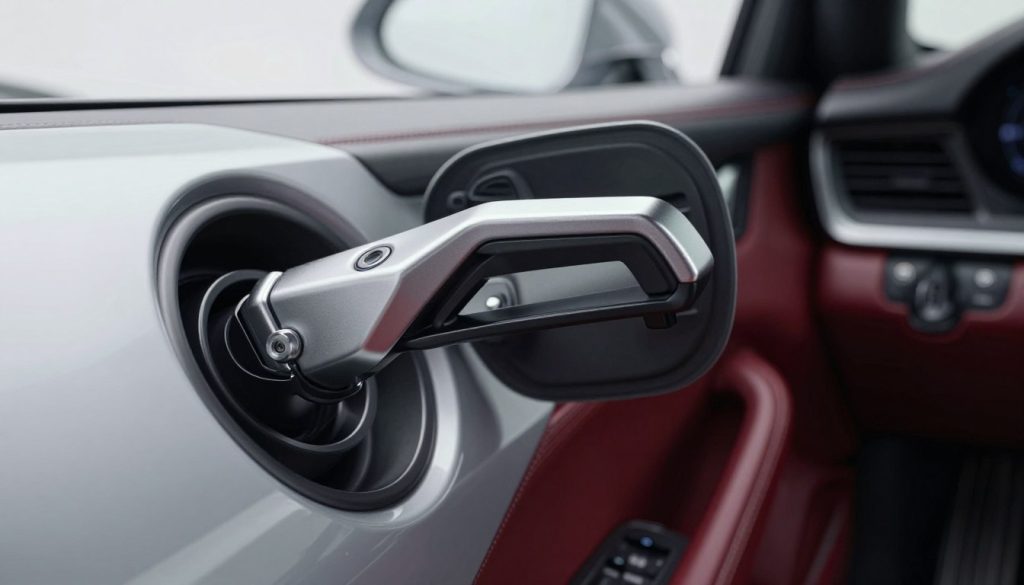
Understanding whether your Porsche uses an electronic or mechanical release system can help you troubleshoot issues more effectively.
Step 3: Open the Fuel Door and Remove the Cap
Now that you’ve activated the release mechanism, it’s time to open the fuel door and remove the cap. This final step before refueling requires some care to ensure a smooth and safe experience.
Correct Cap Removal Technique
To remove the cap, turn it counterclockwise. You may hear a slight hissing sound as the pressure is released. This is normal. Continue turning until the cap comes loose. Be prepared to catch any remaining fuel vapors by keeping the cap close to the fuel inlet.
Tip: For most Porsche models, the cap is designed to be tethered to the fuel door or filler neck, preventing it from getting lost.
Proper Cap Storage During Refueling
During refueling, it’s essential to store the cap properly to avoid contamination and ensure it doesn’t come into contact with dirt or debris. Many Porsche models have a designated place to hang or store the cap while refueling.
For newer models with capless systems, this step is eliminated, reducing the risk of improper cap storage.
Capless Fuel Systems in Newer Models
Some newer Porsche models feature capless fuel systems. These systems eliminate the need for a traditional fuel cap, reducing the risk of improper cap storage and minimizing fuel vapor escape.
| Model | Fuel System Type | Cap Removal Required |
|---|---|---|
| 911 (991.2 and later) | Capless | No |
| 718 (982 and later) | Capless | No |
| Older Models | Capped | Yes |
Understanding your Porsche’s fuel system type is crucial for proper refueling. Always consult your owner’s manual for specific instructions tailored to your vehicle.
Troubleshooting Common Gas Tank Opening Issues
If you’re having trouble opening your Porsche’s gas tank, you’re not alone. Understanding how to troubleshoot common gas tank opening issues can save you time and hassle. The gas tank release mechanism is a critical component of your vehicle’s fuel system, and issues with it can be frustrating.
When the Release Button Fails
If the release button doesn’t respond when pressed, there are a few potential causes to investigate. First, ensure that your Porsche’s electrical system is functioning correctly, as a dead battery or faulty wiring can affect the button’s operation. Additionally, check if there’s an issue with the button itself, such as wear and tear or dirt accumulation, which can be cleaned or replaced as needed.
Dealing with Stuck or Frozen Fuel Doors
In colder climates, the fuel door can sometimes become stuck or frozen due to ice formation. To address this, gently apply a de-icer spray or warm water to loosen the ice. Avoid using force, as this could damage the door or the surrounding paintwork. Regular maintenance, such as lubricating the hinges, can also help prevent this issue.
Electronic System Failures and Solutions
Modern Porsches rely on sophisticated electronic systems to control the gas tank release. If the electronic system fails, it may not respond to the release button. In such cases, checking the fuse related to the fuel door mechanism is a good starting point. If the fuse is blown, replacing it might resolve the issue. For more complex electronic failures, consulting a professional mechanic or a Porsche dealership is recommended.
By addressing these common issues, you can ensure that your Porsche’s gas tank release mechanism functions smoothly, allowing for hassle-free refueling.
Using the Emergency Release Feature
Porsche vehicles are equipped with an emergency release feature that allows drivers to manually open the fuel door in case of a malfunction. This feature is particularly useful in situations where the electronic release mechanism fails, ensuring that you can still access the gas tank.
Locating the Manual Override in Different Models
The location of the manual override can vary across different Porsche models. For instance, in the 911 and 718 series, the manual release is typically found in the trunk, while in the Cayenne and Macan, it might be located under the floor panel in the cargo area.
| Porsche Model | Location of Manual Override |
|---|---|
| 911 and 718 Series | Trunk |
| Cayenne and Macan | Under floor panel in cargo area |
| Panamera and Taycan | Trunk or designated compartment |
Step-by-Step Emergency Release Process
To use the emergency release, first locate the manual override according to your Porsche model’s specifications. Then, follow the specific instructions provided in your owner’s manual for the release mechanism.
For most models, this involves pulling the release cable or lever, which will open the fuel door manually.
Tools Required for Emergency Access
In most cases, no additional tools are required beyond what is provided with the vehicle. However, it’s essential to familiarize yourself with the process by consulting your owner’s manual.
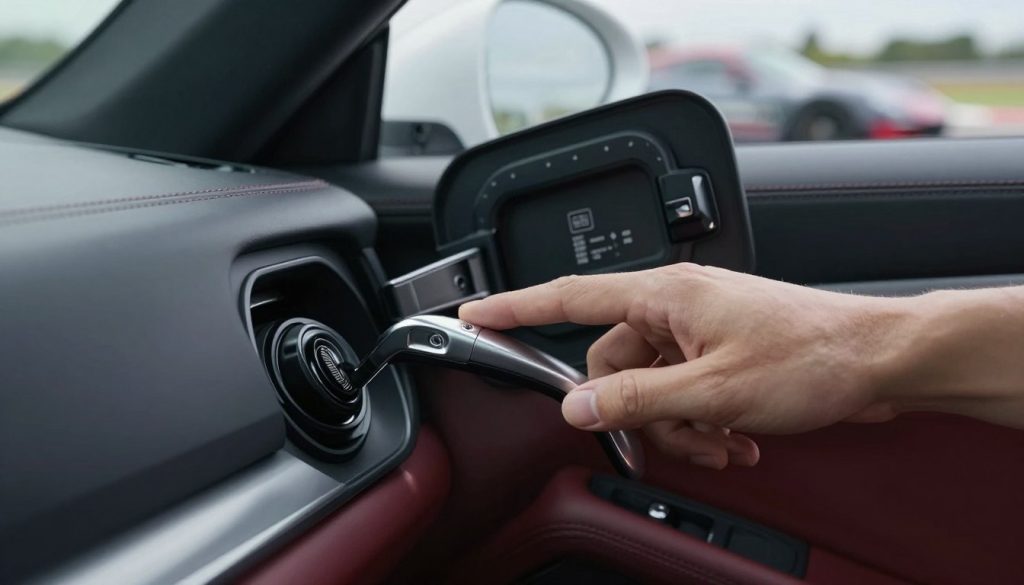
Understanding how to use the emergency release feature can save time and reduce stress in unexpected situations. It’s a valuable aspect of Porsche ownership that combines safety with convenience.
Recommended Fuel Types for Porsche Vehicles
Porsche vehicles are engineered to deliver exceptional performance, and using the right fuel is crucial to maintaining their power and efficiency. The type of fuel you choose can significantly impact your Porsche’s operation, from its engine performance to its fuel efficiency and longevity.
Octane Requirements for Different Models
Different Porsche models have varying octane requirements. For instance, the Porsche 911 and 718 models typically require premium gasoline with an octane rating of 91 or higher. Using the correct octane fuel is essential to prevent engine knock or pinging, which can lead to decreased performance and potentially damage the engine over time.
Premium Fuel Benefits for Performance
Using premium fuel in your Porsche can offer several benefits, particularly for high-performance models. Premium fuel is formulated to provide a higher octane rating, which can help to maximize engine performance, improve fuel efficiency, and reduce the risk of engine knock. For Porsche models that require premium fuel, using it can result in a smoother engine operation and potentially better acceleration.
Fuel Additives: Necessary or Not?
Fuel additives are a topic of debate among Porsche owners. While some argue that fuel additives can help clean the engine and improve performance, others believe they are unnecessary if you’re using the recommended fuel type. It’s essential to consult your owner’s manual or speak with a Porsche dealership to determine if fuel additives are recommended for your specific vehicle.
Safety Considerations When Refueling Your Porsche
Refueling your Porsche requires more than just knowing where the gas tank is located; it demands a commitment to safety. Ensuring a safe refueling experience involves several key considerations.
Static Electricity Precautions
Static electricity can be a significant hazard when refueling. To mitigate this risk, it’s recommended to touch the metal part of the car’s body to discharge static electricity before touching the fuel nozzle. Some fuel caps and nozzles are designed with anti-static features, so it’s worth familiarizing yourself with these.
Proper Handling of Fuel Spills
In the event of a fuel spill, act quickly but safely. Turn off the engine and avoid any sources of ignition. Use a cloth or paper towels to absorb the spill, and dispose of them properly. Avoid getting fuel on your skin or clothes.
Emergency Procedures at the Pump
If an emergency occurs while refueling, such as a fire or significant spill, alert others in the vicinity and contact emergency services. Know the location of emergency shut-off devices at the fuel pump.
By following these safety considerations, you can significantly reduce the risks associated with refueling your Porsche.
Conclusion
Opening the gas tank on your Porsche is a straightforward process once you understand the mechanics involved. By following the steps outlined in this article, you can confidently access your vehicle’s fuel door and refuel safely.
The Porsche fuel door mechanism, though unique, is designed for ease of use. Familiarizing yourself with the release button’s location and operation is key to a smooth refueling experience. Whether you’re driving a 911, Cayenne, or Panamera, the principles remain the same.
Safe Porsche refueling involves more than just accessing the gas tank. It’s about understanding your vehicle’s specific needs, such as the recommended fuel type and safety precautions at the pump. By combining this knowledge with the ability to open your gas tank with ease, you’ll be well-equipped to handle refueling tasks with confidence.
With practice, operating the gas tank release on your Porsche becomes second nature. This confidence can enhance your overall driving experience, allowing you to focus on the road ahead.